Thursday, June 23, 2011

Asari: Bluer than your matriarch's Orion slave girls!

I was originally going to title this post "Asari: the unGender" before I realized that my whole point is that they're not ungendered (read on!).  Whatever,  I've been waiting fifteen years to make a 7-Up unCola joke; it was too good an opportunity to miss!  See, one of my all-time favorite games is Cool Spot.  If you haven't played it, it's one of the last whimsical, fun side-scrollers.  In my opinion.  I would venture to say that it's the best licensed-property game I've ever played.  I would.

Anyway, I'm here to talk about some asari.

You want to talk about asari?
The reason I want to talk about the asari is because of their gender.  As someone who identifies off the gender binary, I'm forced almost every day to consider issues of gender as they pertain to my life.  I've found that a lot of people I interact with don't think about these things.  There's "womanly" and "manly" and there are the "deviants" who act "too feminine" or "too masculine" for whatever gender we assign to them based on their biological sex. 


As an aside, I'm writing with the assumption that the reader has a basic concept of critical gender theory.  If you don't, uh.  Google "critical gender theory" and go from there.  Everything I write, as always, is only my opinion as I observe things with a critically trained, but still fannish, eye.  I'm happy to answer specific questions about stuff, but I really am not a good teacher.  I swear.  I also write this only to start a discussion on the topic, not to complete one.  My thoughts are scattered and unprofessional, for I am scattered and not a professional.

So the asari, we are told, are monogendered. Liara, the adorable archaeologist asari (see what I did there?), says "male and female have no meaning for us."


I think it's helpful to ignore the gendered pronouns and descriptors that characters use in-game to describe asari.  I have only played the game in English, I'd be curious to know what other languages use for the asari.  Arguably, we don't have words that are equivalent to the words aliens use to describe themselves.  So we end up with our words used in the best way they can be, which may be lacking such as "mother" and "father" or "matriarch", "maiden" and "matron" (which are pretty much shout outs to the triptych feminine goddess/es of many cultures).  


Basically, "the only water in the forest is the river."  (Sorry, Doctor Who reference.)


But the codex exists to describe things in our terms.  Theoretically.  And this is what we get from the codex:
"[W]hile asari have only one gender, they are not asexual like single-celled life—all asari are sexually female."
The definition of sexually female that we've established seems to be pretty simple.  Females produce ova (eggs!).  Even plant-females. But that's not how the asari reproduce, so it's not really applicable.  So if the asari are female, they are female in a way that females from our planet are not.  But... what way?  


I call shenanigans!  And here's why.


First: they have mammaries.  Or two sacs of something hanging off their chest.  If they're not mammaries, they're a pretty good imitation of mammaries, and I find it really hard to believe that an entire non-mammaried species would get implants just to fit in.  But since they don't reproduce the same way mammals do, these are apparently vestigial mammaries.  Unless they produce milk, which just makes it even harder to buy that the asari are completely different from human females.  Either way, the mammaries stand out.  Er.  You know.


Second, and more importantly: the Mass Effect series is written by humans for human consumption.  We are applying our rules, values, and social mores to fictional species.  For the most part, the people writing mainstream media think there are only two genders and that those genders are fixed, with only a little bit of wiggle room (such as "tom boys").  They also create games written for the eyes of a particular consumer.  Despite what the game tells us about gender having no meaning to the asari, it has a lot of meaning to us.  And all of the signs BioWare gives me are pointing towards the asari being, generally, feminine women.  


When I see blue-skinned humanoids with what appear to be mammaries dancing up on tables or down in laps in Chora's Den, I immediately think of one thing.


Orion Slave Girl

When I find out that the main sex worker on the Citadel is a blue-skinned humanoid with what appear to be mammaries,  who visibly only employs women, connections happen in my brain.  For comparison here, the Blooming Rose in Dragon Age 2 has a variety of sex and gender options in your preferred sex worker.  That says to me that BioWare probably knew exactly what they were doing, at least by the time of Mass Effect 2.  They were stocking a brothel with one gender, made up of feminine women.  (I know that ME2 was released first, but they were in development at the same time.  And I've been told DA:O had similar options to DA:2.)


There are more signs.  Liara's armor is the feminine version in Mass Effect, for example.  Azure.  Samara's outfit.  Morinth's succubus-like story.  The way the asari talk.  Some are big and some are small, but there are plenty of parts of the games that scream "the asari are feminine".  


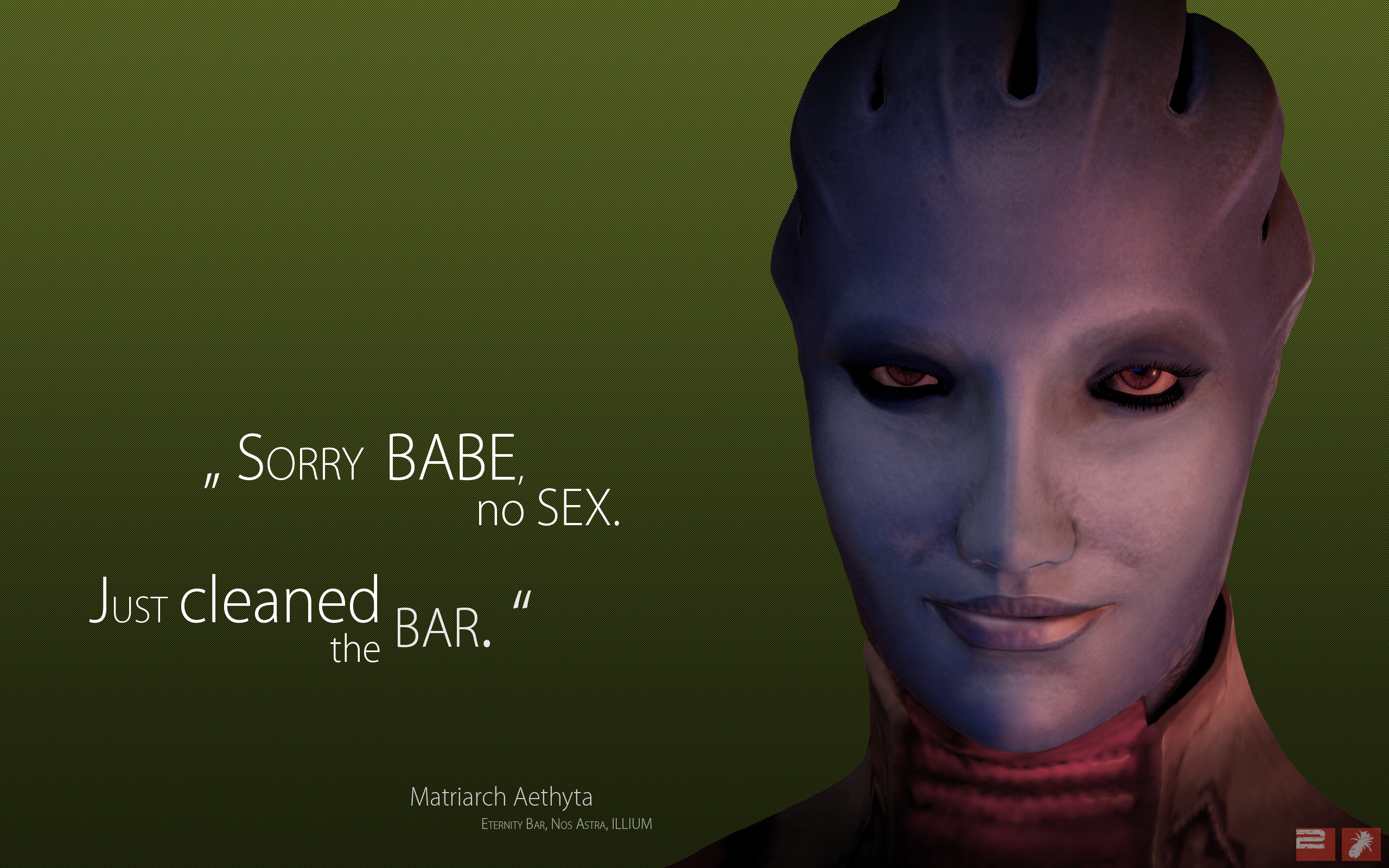
There are two notable exceptions to all this femininity.  Aria T'Loak, who is ruthlessly in charge of an entire space station, and Matriarch Aethyta, who's given a deeper voice and more predatory behavior that generally invokes a sense of masculinity.  Considering she's probably Liara's father, I don't think that's a coincidence.  


My point is that even if the asari have only one sex and one gender inside their fictional universe, and even though they say that human gender concepts don't apply to them, BioWare wants us to think of them as feminine unless they are in masculine roles (the head of a criminal society or a known character's "father"), and BioWare very clearly makes them appear female.


It's a missed opportunity to show us twenty-first century humans living in a very rigid culture what it means to really not have gender be a concern, to really be an ungendered species or a fluid-gendered species or an openly multi-gendered specie, to really be a species that is completely alien to our sensibilities, and to therefore knock our sensibilities around a little and make us question what we think of as the norm.  


Is it a video game company's job to do that?  I don't know.  But they think it's their job to comment on racism (sorta) and deal with sexism (kinda).  In a game series about a galaxy full of aliens, why does everyone have to seem so human?

Monday, June 13, 2011

Dear Comics: Stop Killing People

As you know, if you read my blog or follow me on twitter (@retconning), I haven't been able to keep up with comics in the buy-them-every-week way.  I don't have the money, as I am one of the horde of underemployed people in the world.  But I follow in other ways, via comic blogs and twitter feeds, and I've kept pretty much up to speed on storylines and the various developments involving my favorite characters.

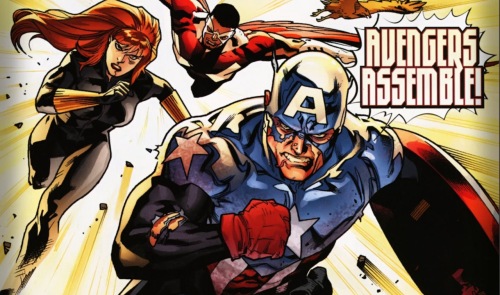
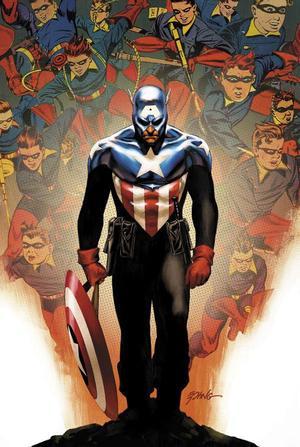
But somehow I'd missed the news that Bucky Barnes was dead.


When I finally found out, it hit my like a sucker punch to the gut.

I wrote about why I love Bucky in the role of Captain America nearly two years ago.  Not much has changed in that time.  And, yeah, I knew they were going to give the role of Cap back to Steve Rogers because of the movie.  I was okay with it.  I figured Bucky could head somewhere else, do good work, be the same interesting and intense guy he is, just without the shield.

But, nope.  Had to kill him.

Why?  Does this change anything?  Help to character growth?  Steve already lost Bucky once.  The Avengers already lost Captain America.  Natasha has lost lovers.  This isn't new.

Then I got angry.   I can understand how fans of Captain America felt when he was killed, but there was never any doubt he'd be back.  And I know what you're saying now: "Psh, it's comics.  He'll be back."

Maybe.

Maybe, but it was still a pointless death of a great character to "advance" the storyline of a character who hasn't done anything new in forty years.

I won't compare DC's treatment of legacy characters to Marvel's.  They both have their faults.  But DC doesn't seem afraid of letting its second and third generation characters exist next to its originals.  There are currently three Flashes: Jay Garrick, Barry Allen, and Wally West.  There are two Green Arrows: Oliver Queen and Connor Hawke.  The universe isn't worse for it, they're better, because those other characters are awesome.

Besides, Bucky isn't a second generation character.  He's been with Steve from the beginning.  He was never "Kid America", he was Bucky and then he was Winter Soldier and then he was Captain America. He wasn't a sidekick, he was a scout.  And then he was a hero.  And the he was a leader.

And now he's dead.

And it still feels pointless.

RIP, Bucky Barnes.

Friday, June 10, 2011

X-Men First Class: We Don't Need No Stinking Allegories

I wanted to give X-Men First Class some time to settle in my brain before I wrote down my opinions about it.  There have been a lot of fantastic responses on the internets regarding the portrayal of race and gender in a movie set in a time very unfriendly to people of color and women (more unfriendly than now), and they said a lot of what I was thinking.

There has also been a lot of talk about the continued use of the X-Men movies as an allegory for the struggle of GLBT people.

The day before I went to see the movie, I read a review on AfterElton.com (spoilers!):
These gay parallels were edgy and interesting in 2003 (and in 2000, when the first X-Men movie came out). But in 2011? It hasn't just been done — it's about as far from edgy as you can get. Why not an actualgay mutant, not just mutants as metaphors for gays? Even the "assimilation or separatist" debate has long since been settled by most GLBT folks.
Ignoring that last statement, which is completely ridiculous and fodder for another post all together, I think that's a valid question.  Har har, there was a "Don't Ask Don't Tell" joke nearly a year after it was overturned.  Timely!  Don't worry though, that guy's in love with a lady (who likes ladies also, but only in the comics and not in the movies... yet), so you won't have to actually see anything involving same-sex affection.  Whew!

Meanwhile, elsewhere on the internets, I started to see a lot of fan reaction from a lot of people talking about the chemistry of Charles Xavier (James MacAvoy) and Erik Lensherr (Michael Fassbender).  Not just saying they had good chemistry, or that they were great in their roles - there was that too - but sexualizing the interaction they had with each other.

What really blew me away about this was people with fairly progressive and critical mindsets walking out of a movie that's arguably about the terrible way we treat people who are different and deciding to fetishize the relationship between two men.  And a few times actually getting defensive when called on it, criticizing people who didn't hold the same opinion.

If you're a comic fan, you may remember when Hal Jordan, in A Cry For Justice, mentioned having a threesome with Lady Blackhawk and Huntress.  There was a lot of intra-community backlash, including a lot of people asking why two women can't just have a friendship without there being anything sexual about it.

I started to feel guilty about my reaction to the First Class stuff and my discomfort with the way people - mostly women, from what I saw - were sexualizing something that, to me, was platonic.  After all, I completely hone in on subtext between two women all the time.  I've been doing it since Xena: Warrior Princess, and I still do it in Rizzoli & Isles.

But then I realized: I'm looking for representation.  Representation of me and the kind of relationships that I have.  I'm not looking for two women to have sex to titillate me.  I'm looking for myself on the screen.  And I'm not finding me there.

Look at me, I'm back at my point.

I don't think we need gay parallels in movies.  I don't think we need allegories anymore.  I think we need actual legitimate, well-written, three dimensional lesbian, gay, bisexual and transgender characters on our screens.

The X-Men titles have a few that could be used.  One was already in the movie. Mystique is interesting!  She can change her gender at will, and has been in at least one long-term relationship with a woman.  But we don't see any of that.  We see a girl with low self-esteem who throws herself at men.  Okay.

People like me, the people who have longed for representation in the media we love,  could use some real stories.  Maybe the X-Men movies aren't the place to get those stories.  But don't pretend.  It's 2011, and we don't need allegories any more.  We need our stories.

Tuesday, April 19, 2011

Goodbye, Sarah Jane.

Earlier today, right as I was popping Portal 2 into my XBox, the news broke on Twitter that Elisabeth Sladen had died.  I immediately freaked out, then decided to wait for confirmation, which eventually came.

For those of you who don't know, Elisabeth Sladen played Sarah Jane Smith on Doctor Who, a character who has been a companion of two Doctors, a friend of five, and has had two of her own spin-off shows.  She started in the role in 1973 with the third Doctor, kept on with the fourth, came back for an episode with the fifth and the tenth (the first moment I appreciated David Tennant as the Doctor was when he saw Sarah Jane for the first time and his face lit up), and had the eleventh on her own show  

She was an icon.  Of feminism in the seventies, of aging brilliantly in the new century.  She bridged the gap between the old Doctor Who and the new one.  The now non-canonical Sarah Jane Smith audios are still some of my favorite Doctor Who-related adventures of all time.

It's funny, because the reaction to her death has been really strong.  I felt like someone kicked me in the chest.  A friend tweeted that she was almost crying while out shopping.  Another told me she felt like crying, and asked if it was a stupid feeling.  I said to someone that I felt silly feeling as upset as I do, and she said it's not silly at all.

And I think that's a thing that I love about Doctor Who.  If you're really in it, if you're traveling along on the adventures with this crazy man, if you go to conventions or signings, if you really love what this show is and what it stands for (if you connect in any of these ways or in your own way), it makes friends out of strangers.  It turns people into loved ones that otherwise wouldn't be.  And when they go, it hurts.

Elisabeth Sladen's death is sad.  I am sad.  I wish the best to her family and friends, to those that really knew her.  And to my fellow fans I'll just end with a quote that's been wandering around the internet today, because it's true.  And it's time to say goodbye.

"No. The universe has to move forward. Pain and loss, they define us as much as happiness or love. Whether it's a world, or a relationship... Everything has its time. And everything ends"

Wednesday, March 30, 2011

River Song and Lois Lane; Don't Call Them Cougars. They Might Hurt You.

With less than one month until the return of Doctor Who (eee!) a new trailer was released today. 


There's a lot of awesomeness right there, but mostly there's River Song.  Because River Song is amazing.  (If you don't like River Song, feel free to tell me why.  Try not to base it on Rose Tyler, though, because then I will pay absolutely no attention to you.)

River Song isn't just amazing because of her innate bad-assery, intelligence, and beauty.  River Song is amazing because she's being played by a forty-seven year old actress, in an action-heavy part, against a twenty-eight year old actor.  In a love story.

Over the weekend, there was a lot of buzz around the decision to cast Amy Adams as Lois Lane, because she's thirty-six, and Henry Cavill is twenty-seven.  The questions about whether she's too old are ridiculous, but keep coming.  Mostly from big media outlets.  And then the counter-voices mention that the classic Lois/Supes combo of Kidder/Reeves involved an older Lois. 


There's a lot of talk these days of fanboys and what they can and can't handle, what they will and won't freak out about, and what studios will and won't do to please them (and whether they should). 

I'm not saying there's 100% overlap between Doctor Who fans and Superman fans.  And, sure, the Doctor is a 900 (ish) year old Time Lord who could regenerate into the body of a seventy year old man (though that doesn't seem to be the way the BBC is going, does it?).  But we all know looks count, and we all know plenty of us have fandom overlaps.

I think maybe the media outlets who keep perpetuating this age thing should look around various fandoms.  The people who care about the age aren't the hardcore fans.  Because we know better.

Friday, March 25, 2011

Sucker Punch: A Dreamer's Nightmare

I just got back from seeing Sucker Punch.  Yep, opening day by myself.  I'm working on getting over the idea that the movies need to be a social event, especially since I can just come home and be social about it with people on the internet. 

While I was in the theater, a friend of mine tweeted a link to an article at i09 about how terrible the movie is.  It makes a few good points, but I look at it in a very different way.

[Spoilers both at that link and in the rest of my post.]

First let me say that there are definitely some issues with the movie.  I'm not into the school girl thing or the naughty nurse thing, so the outfits of Emily Browning and Jenna Malone sort of rubbed me the wrong way (as opposed to the right way, which I think was the intent).  But some people are into that, sort of like I'm into the Grunge-Lady-Knight of Sweet Pea or the Steampunk-Soldier of Blondie (Abbie Cornish and Vanessa Hudgens, respectively).  Their nicknames were ridiculous and seemed to come from nowhere with absolutely no explanation: a definite failing.  And I really really could not get past Emily Browning's looking like a 15 year old - but that's an issue I have with her in everything, not just this movie.  The fact that she's going to be the lead in a retelling of Sleeping Beauty is super disturbing to me.

Abbie Cornish as Sweet Pea.  Included 'cause she's my favorite.
But this is a mainstream action movie release in which all of the heroes are women.  There are no romantic sublpots.  Please feel free to let me know if there's another "big release" action movie out there with no romance involved, especially ones with supposed female leads, because I can't think of any off the top of my head.  So basically it's a pretty intense movie just for its mere existence.

This doesn't excuse it from its faults, of course.  After all, mainstream action movies, no matter who the story is about, are marketed towards dudes.  That's just how it is.  There may be women who want to go see this movie, there may even be lots of them, but the marketing machine (and therefore producers and other execs that make decisions) aren't aiming for them.  

Still, the main criticism seems to be in the form of "girl in insane asylum imagines herself into whorehouse and then imagines herself into cheesy action movies" makes no sense whatsoever.

Not gonna lie, that was pretty much the thing I had the least issues with in this movie.  Why?  Because I use my imagination to escape the often crushing anxiety and depression I face in my day to day life.  I have since I was a little kid.  And I don't face things nearly as frightening as what Babydoll (sigh) faced.  I incorporate my friends.  I incorporate my surroundings.  And I definitely make myself the superhero in my own action movie (and though I may wear more clothes, sometimes the lady I'm rescuing doesn't).  I create an augmented reality in order to process the real reality in a way that doesn't leave me completely paralyzed.

So I've got not problem with the final level of the dream.  And the whorehouse level... I think it was used as a gateway.  And this reminds me of the debates I'd listen to (and sometimes partake in) all through college and law school.  About pornography/prostitution and women's agency.  Maybe Babydoll was giving herself agency by writing herself into a story about a prostitute who gives herself agency.  Maybe in her mind - which is clearly not fully developed - it's a step up.  Maybe it's a way for her to translate the horrors she's facing into something more glamourous, but nearly as terrible.

And that is the real problem with the story:  too many maybes.  We spent a lot of time seeing stylized action, or long close ups of Babydoll's (sigh) childish face.  We didn't spend a lot of time on character development.  So this is a so-so story, but a fun action movie starring women who do their best to take their awful, terrible lives into their hands.

I'm not a Snyder apologist.  This is still a film made by a man (I often wonder what Deborah Snyder's role in making these movies is) for an audience expected to be mostly male.  And framed that way, there are plenty of reasons that this movie isn't empowering (plenty).  But I don't think it's a misogynist film any more than 300 was anti-Arab.  I enjoyed watching women kick some ass.  I enjoyed them forming bonds that weren't destroyed by jealousy over men.  I enjoyed the fact that none of them kissed each other (I know, I know).  I enjoyed the bittersweet ending, and the fantastic feel of the whole thing taken from start to finish.  I also really enjoyed Abbie Cornish and would like to see her in more action films as the lead.

Oh, small tangent: I really enjoyed the soundtrack, which was almost exclusively female-fronted bands.  It also had "Army of Me", by Björk that was in the Tank Girl film during a big moment that took place in a stylized whorehouse.  Yep.  (Tank Girl was directed by a woman, actually.  And there are a few other similarities that I noticed during the film, from animated, imagined action sequences to outfits.)

Where was I? 

Lots of issues with this film.  Absolutely.  Definitely not the most empowering movie out there (though I don't find Steel Magnolias empowering, and some people seem to).  But I (personally) enjoyed it, and my problems with the film don't stem as much from the plot as the characters.  I think Zack Snyder thinks he's made the next Buffy (though probably not consciously).  He hasn't.  But Buffy wasn't really Buffy either, if you really look at the characters and the situations they're in (that's a death-wish-laden thought for another time, though).


I don't really have a rating system.  I'm not sure if I'd recommend this film to a lot of my friends.  But I'd recommend it to some.  And I don't regret seeing it, unlike some other movies I've seen recently (cough, Jane Eyre, cough).  So.  Take that as you'd like, and feel free to let me know your thoughts.

Wednesday, March 16, 2011

The Responsibility to Educate

One of the things that happens when you write about Stuff is that people ask you questions about Stuff.  

About a year ago, I wrote about the portrayal of Batwoman, Kate Kane, femininity, etc. and received a lot of comments on that post.  One of the comments (if you don't feel like reading the link) got angry at me for calling Kate Kane a femme (I think the commenter misunderstood, personally, because I was only calling Batwoman a femme) and we got into a "discussion" about gender theory.  I asked the commenter to inform us, since she (self-identified as a she) was very angry and not very clear.  The response I got was that it's not her responsibility to educate.  I agree.  In fact, I said:
I'm not here to delve into the trenches of critical gender theory, I'm here to use my background of critical gender theory, my love of pop culture and comic culture, and my personal experiences to rant, rave, and/or praise the comics (and comic-related things) that I read and see.
The same stays true (though obviously expanded from comics).  Obviously, writing the blog  - and ranting a lot on twitter - means I want to share my viewpoints with a larger audience.  And to that extent, I always welcome questions and conversations.  

But how much are we - whatever the we is that's being tokenized - expected by people to educate just because we exist?  If someone says a homophobic comment, do I have to tell them why they're being a homophobe, or can I just walk away?  Is it my responsibility, as self-identifying gay person, to step up?  Is a straight person expected to step up, too?  I honestly don't think they are.  A straight person may choose to say something, but I think that if they were to walk away there would be a lot less judgment on them.  

I hate to say that it feels like it's very much "us vs. them", but it too-often does.  And sometimes the us are part of the them (I am white and I have white privilege, and that means I will often be part of Them, and that's something I deal with) and that's something a lot of people have the ability to ignore.  

When I talk about a comic book or video game's portrayal of gender and sexuality, it's because I choose to.  But a lot of times, particularly when talking about issues of non-binary gender identity, I feel like it's because I have to.  There aren't enough people saying these things. 

I thought about this question a lot over the last weekend, at PAX East.  I was frustrated - not by anyone in particular - by this idea that you have to speak up when something negative occurs, that you have to work to educate the community, because they won't educate themselves.  Why won't they educate themselves?

Because they don't have to.

I think about Audrey Lourde's The Master's Tools a lot. I think about the heavy gender assumptions that go along with a lot of the critical gender and sexuality pieces I read about things I'm interested in.  I think about all of the very feminine teenage girls on television who are coming our or defying labels, and I think about Franky Fitzgerald and how she's one of the most radical characters on scripted television since Lieutenant Uhura.  

Franky Fitzgerald, from series five of Skins.

It makes me think I have a lot to say.  But that's my choice.  Right?