I'm moving!
Actually, I already moved: http://eclectic-geek.com
I wanted to migrate away from Google as it got a little less privacy-respecting and everything became one G+ tangle. Also, I wanted a fresh start. So for anyone still reading this, that's where you can find new content from me.
Tuesday, March 27, 2012


Friday, July 8, 2011
Our Love is Real
Back in the day, right after Ellen Degeneres came out, her sitcom did an episode wherein Ellen was essentially transported to a world run by straight people, where gay people were the minority. It was meant to be social commentary, I guess, but I was a teenager at the time and the main thing I remember thinking was that it wasn't very funny.
Since then, I've read a lot of those kinds of social commentary, mostly feminist or anti-feminist dystopian fiction about societies run by women. With mixed results. Most of them aren't very good. I think it may be a genre I'm predisposed not to like, because I don't need to have reality turned on my head in order to show me that it's ridiculous. I know it's ridiculous. I don't need to have my power-holding group turned into the marginalized group so that I can wake up to my own privilege, because I'm aware of both my privilege and marginalization based on the various labels I slap on (and that are slapped onto me).
Then again, we can all use a reminder from time to time. Which is probably why I still reads/watch those kinds of stories. Plus, it can be fun to see the Oppressor become the Oppressed. Even if it's just for fiction. I'm human.
Over the past few days on Twitter, I'd seen a few people discuss this comic called Our Love is Real. I had no idea what the plot was, but I picked up from the context of the tweets (and who was tweeting them) that there was some sort of social and/or political message that had to do with sexuality and/or gender.
So I gave in and bought it last night.

[Technical tangent!] Incidentally, this is the fist comic I have bought and read using comiXology. I don't have an iPad, but I do have an iPhone 4. I know some people might be worried by the smaller screen size, but I found it a total pleasure to read the book. The GuidedView actually added a fun new aspect to reading, and the art looked crisp and "lifelike". I am the kind of person who loves technology, though, so take my rave review of the app (and it is rave, I may go to digital-only when I start reading regularly again) with a grain of salt.
[Non-technical point of the post!] This story takes place in some sort of undisclosed future, "five years after the AIDS vaccine". On its face, it's a story about a dog-loving cop who enjoys beating on veggie-loving deviants, then gets his world turned upside down when he meets a crystal-lover named Brin. And by loving, I mean having-sex-with. Our unhero has a girlfriend named Chynna, who is a poodle. They have sex, and this is considered the norm. He beats on people who alter plants so they can have sex with them, and then he meets someone who finds the idea of physical sex disgusting, because sex with a crystal is so much better.
Still with me?
It's also a social commentary (obviously) and... kinda a love story, too.
I really enjoy the art style, which makes Jok, the unhero, look like an overgrown bully and Brin like his polar opposite. I particularly noticed the really nice style during a fight scene towards the end of the book. I went back and read it a second time because I liked it so much. And I'm notoriously picky about fight scenes. So I'll say that Steven Sanders' art is right up my alley and is definitely a plus to the book (and it looked great on my retina display thingie).
There are a few plot holes that have more to do with world-building than anything else, and that I can forgive because it's a one issue sorta thing. For instance, I wonder how the human race procreates if the accepted sexuality is bestiality. I just assume that there are some people who still have sex with humans. Maybe there is a caste system, and all the cops happen to be into dogs. I don't know. Maybe if we saw more of this world, we'd get more answers.
The issue I've always had with these kind of stories is that you have to get past this ridiculous idea that will probably never happen, and the story that's told has to be universal anyway. That's sort of the deal with all science fiction and fantasy, but this subgenre of speculative fiction takes it to a whole new level. Do I really believe that five years after we eradicate AIDS we'll suddenly be a society that is okay with bestiality? Nooooo. Do I accept bestiality as a stand-in for homosexuality? Noooo.
[Tangent!] There are always issues of consent when something like bestiality comes up, and I think OLIR skirts them by imbuing the only dog we actually see with some form of intelligence and the context of genetically altering sexual artners, the way the "veggie sexuals" do. Maybe these particular dogs can consent, which is why it's become an accepted, non-deviant sexuality. I don't think that's the point of this story, though. I really don't. [End tangent!]
I don't have to accept one as a stand in for another. Because bestiality and homosexuality both exist in this world. And Jok makes it known that he has a bitch at home. His dog's a lady. And he's actually uncomfortable at the idea of being sexually attracted to males. About as uncomfortable at the idea of being attracted to humans, anyway.
This setting also allows Humphries and Sanders to play around not only with our preconceived notions of sexuality, but also gender. Does the fact that your partner may have two genders (a plant) or no genders (a crystal) make a difference? Does your gender matter if your partner is a tree?
I liked Our Love is Real because it created a world that made these questions come up, and forced the readers, even if only in a small way, to consider their views on deviant behavior. But when we put our preconceived notions of gender and sexuality aside, where do we end up?
Thursday, June 23, 2011
Asari: Bluer than your matriarch's Orion slave girls!
I was originally going to title this post "Asari: the unGender" before I realized that my whole point is that they're not ungendered (read on!). Whatever, I've been waiting fifteen years to make a 7-Up unCola joke; it was too good an opportunity to miss! See, one of my all-time favorite games is Cool Spot. If you haven't played it, it's one of the last whimsical, fun side-scrollers. In my opinion. I would venture to say that it's the best licensed-property game I've ever played. I would.
Anyway, I'm here to talk about some asari.
 |
| You want to talk about asari? |
The reason I want to talk about the asari is because of their gender. As someone who identifies off the gender binary, I'm forced almost every day to consider issues of gender as they pertain to my life. I've found that a lot of people I interact with don't think about these things. There's "womanly" and "manly" and there are the "deviants" who act "too feminine" or "too masculine" for whatever gender we assign to them based on their biological sex.
As an aside, I'm writing with the assumption that the reader has a basic concept of critical gender theory. If you don't, uh. Google "critical gender theory" and go from there. Everything I write, as always, is only my opinion as I observe things with a critically trained, but still fannish, eye. I'm happy to answer specific questions about stuff, but I really am not a good teacher. I swear. I also write this only to start a discussion on the topic, not to complete one. My thoughts are scattered and unprofessional, for I am scattered and not a professional.
So the asari, we are told, are monogendered. Liara, the adorable archaeologist asari (see what I did there?), says "male and female have no meaning for us."
I think it's helpful to ignore the gendered pronouns and descriptors that characters use in-game to describe asari. I have only played the game in English, I'd be curious to know what other languages use for the asari. Arguably, we don't have words that are equivalent to the words aliens use to describe themselves. So we end up with our words used in the best way they can be, which may be lacking such as "mother" and "father" or "matriarch", "maiden" and "matron" (which are pretty much shout outs to the triptych feminine goddess/es of many cultures).
Basically, "the only water in the forest is the river." (Sorry, Doctor Who reference.)
But the codex exists to describe things in our terms. Theoretically. And this is what we get from the codex:
I think it's helpful to ignore the gendered pronouns and descriptors that characters use in-game to describe asari. I have only played the game in English, I'd be curious to know what other languages use for the asari. Arguably, we don't have words that are equivalent to the words aliens use to describe themselves. So we end up with our words used in the best way they can be, which may be lacking such as "mother" and "father" or "matriarch", "maiden" and "matron" (which are pretty much shout outs to the triptych feminine goddess/es of many cultures).
Basically, "the only water in the forest is the river." (Sorry, Doctor Who reference.)
But the codex exists to describe things in our terms. Theoretically. And this is what we get from the codex:
"[W]hile asari have only one gender, they are not asexual like single-celled life—all asari are sexually female."
The definition of sexually female that we've established seems to be pretty simple. Females produce ova (eggs!). Even plant-females. But that's not how the asari reproduce, so it's not really applicable. So if the asari are female, they are female in a way that females from our planet are not. But... what way?
I call shenanigans! And here's why.
First: they have mammaries. Or two sacs of something hanging off their chest. If they're not mammaries, they're a pretty good imitation of mammaries, and I find it really hard to believe that an entire non-mammaried species would get implants just to fit in. But since they don't reproduce the same way mammals do, these are apparently vestigial mammaries. Unless they produce milk, which just makes it even harder to buy that the asari are completely different from human females. Either way, the mammaries stand out. Er. You know.
Second, and more importantly: the Mass Effect series is written by humans for human consumption. We are applying our rules, values, and social mores to fictional species. For the most part, the people writing mainstream media think there are only two genders and that those genders are fixed, with only a little bit of wiggle room (such as "tom boys"). They also create games written for the eyes of a particular consumer. Despite what the game tells us about gender having no meaning to the asari, it has a lot of meaning to us. And all of the signs BioWare gives me are pointing towards the asari being, generally, feminine women.
When I see blue-skinned humanoids with what appear to be mammaries dancing up on tables or down in laps in Chora's Den, I immediately think of one thing.
When I find out that the main sex worker on the Citadel is a blue-skinned humanoid with what appear to be mammaries, who visibly only employs women, connections happen in my brain. For comparison here, the Blooming Rose in Dragon Age 2 has a variety of sex and gender options in your preferred sex worker. That says to me that BioWare probably knew exactly what they were doing, at least by the time of Mass Effect 2. They were stocking a brothel with one gender, made up of feminine women. (I know that ME2 was released first, but they were in development at the same time. And I've been told DA:O had similar options to DA:2.)
There are more signs. Liara's armor is the feminine version in Mass Effect, for example. Azure. Samara's outfit. Morinth's succubus-like story. The way the asari talk. Some are big and some are small, but there are plenty of parts of the games that scream "the asari are feminine".
There are two notable exceptions to all this femininity. Aria T'Loak, who is ruthlessly in charge of an entire space station, and Matriarch Aethyta, who's given a deeper voice and more predatory behavior that generally invokes a sense of masculinity. Considering she's probably Liara's father, I don't think that's a coincidence.
My point is that even if the asari have only one sex and one gender inside their fictional universe, and even though they say that human gender concepts don't apply to them, BioWare wants us to think of them as feminine unless they are in masculine roles (the head of a criminal society or a known character's "father"), and BioWare very clearly makes them appear female.
It's a missed opportunity to show us twenty-first century humans living in a very rigid culture what it means to really not have gender be a concern, to really be an ungendered species or a fluid-gendered species or an openly multi-gendered specie, to really be a species that is completely alien to our sensibilities, and to therefore knock our sensibilities around a little and make us question what we think of as the norm.
Is it a video game company's job to do that? I don't know. But they think it's their job to comment on racism (sorta) and deal with sexism (kinda). In a game series about a galaxy full of aliens, why does everyone have to seem so human?
I call shenanigans! And here's why.
First: they have mammaries. Or two sacs of something hanging off their chest. If they're not mammaries, they're a pretty good imitation of mammaries, and I find it really hard to believe that an entire non-mammaried species would get implants just to fit in. But since they don't reproduce the same way mammals do, these are apparently vestigial mammaries. Unless they produce milk, which just makes it even harder to buy that the asari are completely different from human females. Either way, the mammaries stand out. Er. You know.
Second, and more importantly: the Mass Effect series is written by humans for human consumption. We are applying our rules, values, and social mores to fictional species. For the most part, the people writing mainstream media think there are only two genders and that those genders are fixed, with only a little bit of wiggle room (such as "tom boys"). They also create games written for the eyes of a particular consumer. Despite what the game tells us about gender having no meaning to the asari, it has a lot of meaning to us. And all of the signs BioWare gives me are pointing towards the asari being, generally, feminine women.
When I see blue-skinned humanoids with what appear to be mammaries dancing up on tables or down in laps in Chora's Den, I immediately think of one thing.
 |
| Orion Slave Girl |
When I find out that the main sex worker on the Citadel is a blue-skinned humanoid with what appear to be mammaries, who visibly only employs women, connections happen in my brain. For comparison here, the Blooming Rose in Dragon Age 2 has a variety of sex and gender options in your preferred sex worker. That says to me that BioWare probably knew exactly what they were doing, at least by the time of Mass Effect 2. They were stocking a brothel with one gender, made up of feminine women. (I know that ME2 was released first, but they were in development at the same time. And I've been told DA:O had similar options to DA:2.)
There are more signs. Liara's armor is the feminine version in Mass Effect, for example. Azure. Samara's outfit. Morinth's succubus-like story. The way the asari talk. Some are big and some are small, but there are plenty of parts of the games that scream "the asari are feminine".
There are two notable exceptions to all this femininity. Aria T'Loak, who is ruthlessly in charge of an entire space station, and Matriarch Aethyta, who's given a deeper voice and more predatory behavior that generally invokes a sense of masculinity. Considering she's probably Liara's father, I don't think that's a coincidence.
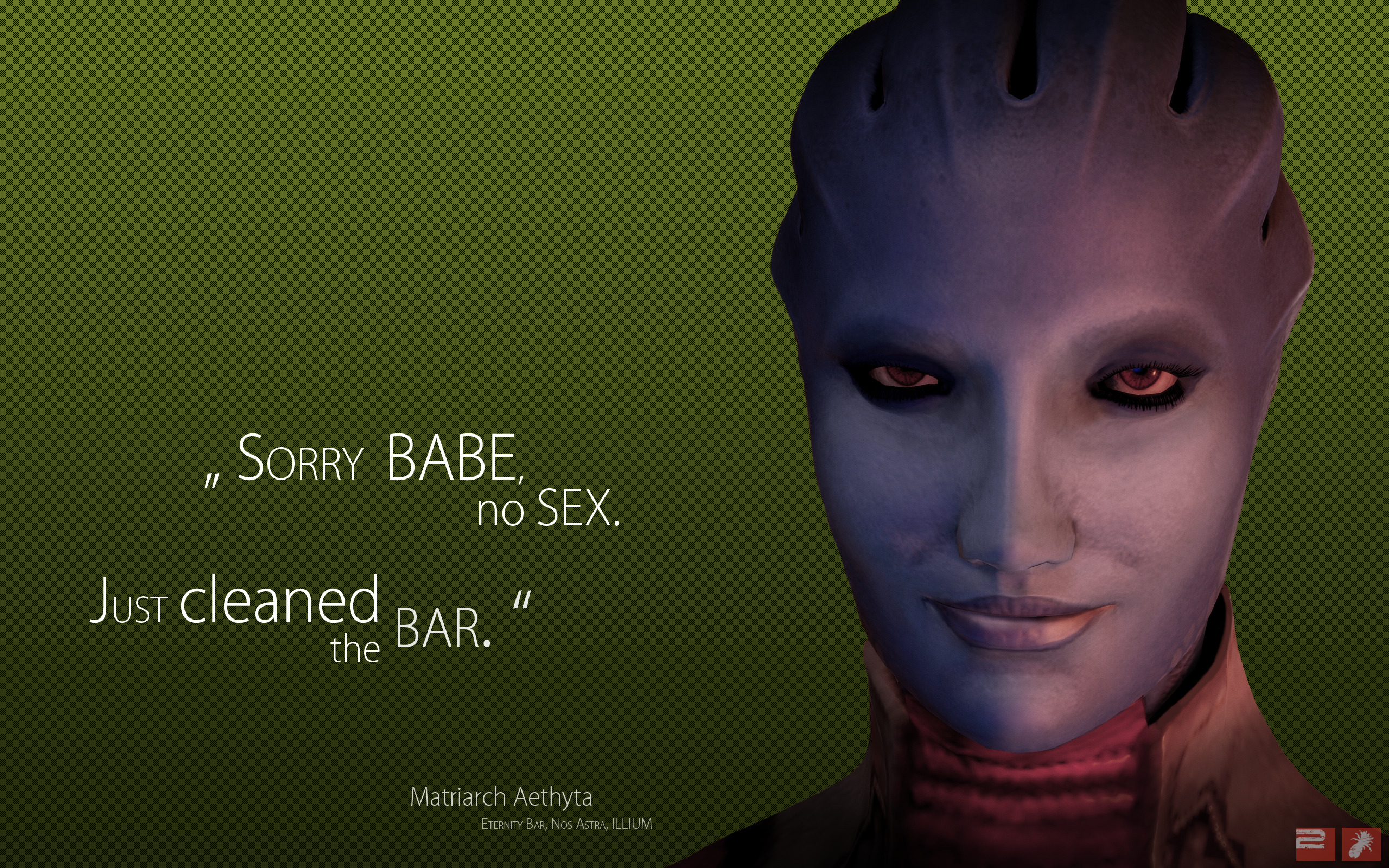
My point is that even if the asari have only one sex and one gender inside their fictional universe, and even though they say that human gender concepts don't apply to them, BioWare wants us to think of them as feminine unless they are in masculine roles (the head of a criminal society or a known character's "father"), and BioWare very clearly makes them appear female.
It's a missed opportunity to show us twenty-first century humans living in a very rigid culture what it means to really not have gender be a concern, to really be an ungendered species or a fluid-gendered species or an openly multi-gendered specie, to really be a species that is completely alien to our sensibilities, and to therefore knock our sensibilities around a little and make us question what we think of as the norm.
Is it a video game company's job to do that? I don't know. But they think it's their job to comment on racism (sorta) and deal with sexism (kinda). In a game series about a galaxy full of aliens, why does everyone have to seem so human?
Monday, June 13, 2011
Dear Comics: Stop Killing People
As you know, if you read my blog or follow me on twitter (@retconning), I haven't been able to keep up with comics in the buy-them-every-week way. I don't have the money, as I am one of the horde of underemployed people in the world. But I follow in other ways, via comic blogs and twitter feeds, and I've kept pretty much up to speed on storylines and the various developments involving my favorite characters.
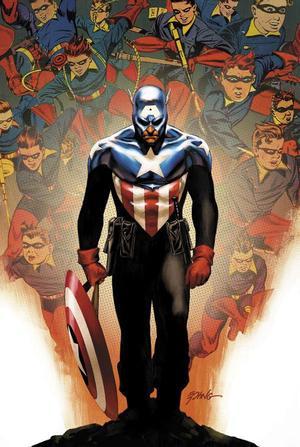
But somehow I'd missed the news that Bucky Barnes was dead.

When I finally found out, it hit my like a sucker punch to the gut.
I wrote about why I love Bucky in the role of Captain America nearly two years ago. Not much has changed in that time. And, yeah, I knew they were going to give the role of Cap back to Steve Rogers because of the movie. I was okay with it. I figured Bucky could head somewhere else, do good work, be the same interesting and intense guy he is, just without the shield.
But, nope. Had to kill him.
Why? Does this change anything? Help to character growth? Steve already lost Bucky once. The Avengers already lost Captain America. Natasha has lost lovers. This isn't new.
Then I got angry. I can understand how fans of Captain America felt when he was killed, but there was never any doubt he'd be back. And I know what you're saying now: "Psh, it's comics. He'll be back."
Maybe.
Maybe, but it was still a pointless death of a great character to "advance" the storyline of a character who hasn't done anything new in forty years.
I won't compare DC's treatment of legacy characters to Marvel's. They both have their faults. But DC doesn't seem afraid of letting its second and third generation characters exist next to its originals. There are currently three Flashes: Jay Garrick, Barry Allen, and Wally West. There are two Green Arrows: Oliver Queen and Connor Hawke. The universe isn't worse for it, they're better, because those other characters are awesome.
Besides, Bucky isn't a second generation character. He's been with Steve from the beginning. He was never "Kid America", he was Bucky and then he was Winter Soldier and then he was Captain America. He wasn't a sidekick, he was a scout. And then he was a hero. And the he was a leader.
And now he's dead.
And it still feels pointless.

But somehow I'd missed the news that Bucky Barnes was dead.
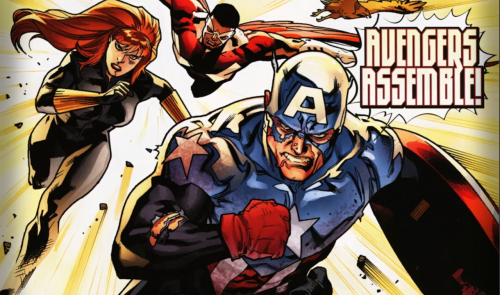
When I finally found out, it hit my like a sucker punch to the gut.
I wrote about why I love Bucky in the role of Captain America nearly two years ago. Not much has changed in that time. And, yeah, I knew they were going to give the role of Cap back to Steve Rogers because of the movie. I was okay with it. I figured Bucky could head somewhere else, do good work, be the same interesting and intense guy he is, just without the shield.
But, nope. Had to kill him.
Why? Does this change anything? Help to character growth? Steve already lost Bucky once. The Avengers already lost Captain America. Natasha has lost lovers. This isn't new.
Then I got angry. I can understand how fans of Captain America felt when he was killed, but there was never any doubt he'd be back. And I know what you're saying now: "Psh, it's comics. He'll be back."
Maybe.
Maybe, but it was still a pointless death of a great character to "advance" the storyline of a character who hasn't done anything new in forty years.
I won't compare DC's treatment of legacy characters to Marvel's. They both have their faults. But DC doesn't seem afraid of letting its second and third generation characters exist next to its originals. There are currently three Flashes: Jay Garrick, Barry Allen, and Wally West. There are two Green Arrows: Oliver Queen and Connor Hawke. The universe isn't worse for it, they're better, because those other characters are awesome.
Besides, Bucky isn't a second generation character. He's been with Steve from the beginning. He was never "Kid America", he was Bucky and then he was Winter Soldier and then he was Captain America. He wasn't a sidekick, he was a scout. And then he was a hero. And the he was a leader.
And now he's dead.
And it still feels pointless.
RIP, Bucky Barnes.
Friday, June 10, 2011
X-Men First Class: We Don't Need No Stinking Allegories
I wanted to give X-Men First Class some time to settle in my brain before I wrote down my opinions about it. There have been a lot of fantastic responses on the internets regarding the portrayal of race and gender in a movie set in a time very unfriendly to people of color and women (more unfriendly than now), and they said a lot of what I was thinking.
There has also been a lot of talk about the continued use of the X-Men movies as an allegory for the struggle of GLBT people.
The day before I went to see the movie, I read a review on AfterElton.com (spoilers!):
These gay parallels were edgy and interesting in 2003 (and in 2000, when the first X-Men movie came out). But in 2011? It hasn't just been done — it's about as far from edgy as you can get. Why not an actualgay mutant, not just mutants as metaphors for gays? Even the "assimilation or separatist" debate has long since been settled by most GLBT folks.
Ignoring that last statement, which is completely ridiculous and fodder for another post all together, I think that's a valid question. Har har, there was a "Don't Ask Don't Tell" joke nearly a year after it was overturned. Timely! Don't worry though, that guy's in love with a lady (who likes ladies also, but only in the comics and not in the movies... yet), so you won't have to actually see anything involving same-sex affection. Whew!
Meanwhile, elsewhere on the internets, I started to see a lot of fan reaction from a lot of people talking about the chemistry of Charles Xavier (James MacAvoy) and Erik Lensherr (Michael Fassbender). Not just saying they had good chemistry, or that they were great in their roles - there was that too - but sexualizing the interaction they had with each other.
What really blew me away about this was people with fairly progressive and critical mindsets walking out of a movie that's arguably about the terrible way we treat people who are different and deciding to fetishize the relationship between two men. And a few times actually getting defensive when called on it, criticizing people who didn't hold the same opinion.
If you're a comic fan, you may remember when Hal Jordan, in A Cry For Justice, mentioned having a threesome with Lady Blackhawk and Huntress. There was a lot of intra-community backlash, including a lot of people asking why two women can't just have a friendship without there being anything sexual about it.
I started to feel guilty about my reaction to the First Class stuff and my discomfort with the way people - mostly women, from what I saw - were sexualizing something that, to me, was platonic. After all, I completely hone in on subtext between two women all the time. I've been doing it since Xena: Warrior Princess, and I still do it in Rizzoli & Isles.
But then I realized: I'm looking for representation. Representation of me and the kind of relationships that I have. I'm not looking for two women to have sex to titillate me. I'm looking for myself on the screen. And I'm not finding me there.
Look at me, I'm back at my point.
I don't think we need gay parallels in movies. I don't think we need allegories anymore. I think we need actual legitimate, well-written, three dimensional lesbian, gay, bisexual and transgender characters on our screens.
The X-Men titles have a few that could be used. One was already in the movie. Mystique is interesting! She can change her gender at will, and has been in at least one long-term relationship with a woman. But we don't see any of that. We see a girl with low self-esteem who throws herself at men. Okay.
People like me, the people who have longed for representation in the media we love, could use some real stories. Maybe the X-Men movies aren't the place to get those stories. But don't pretend. It's 2011, and we don't need allegories any more. We need our stories.
Tuesday, April 19, 2011
Goodbye, Sarah Jane.
Earlier today, right as I was popping Portal 2 into my XBox, the news broke on Twitter that Elisabeth Sladen had died. I immediately freaked out, then decided to wait for confirmation, which eventually came.
For those of you who don't know, Elisabeth Sladen played Sarah Jane Smith on Doctor Who, a character who has been a companion of two Doctors, a friend of five, and has had two of her own spin-off shows. She started in the role in 1973 with the third Doctor, kept on with the fourth, came back for an episode with the fifth and the tenth (the first moment I appreciated David Tennant as the Doctor was when he saw Sarah Jane for the first time and his face lit up), and had the eleventh on her own show
She was an icon. Of feminism in the seventies, of aging brilliantly in the new century. She bridged the gap between the old Doctor Who and the new one. The now non-canonical Sarah Jane Smith audios are still some of my favorite Doctor Who-related adventures of all time.

It's funny, because the reaction to her death has been really strong. I felt like someone kicked me in the chest. A friend tweeted that she was almost crying while out shopping. Another told me she felt like crying, and asked if it was a stupid feeling. I said to someone that I felt silly feeling as upset as I do, and she said it's not silly at all.
And I think that's a thing that I love about Doctor Who. If you're really in it, if you're traveling along on the adventures with this crazy man, if you go to conventions or signings, if you really love what this show is and what it stands for (if you connect in any of these ways or in your own way), it makes friends out of strangers. It turns people into loved ones that otherwise wouldn't be. And when they go, it hurts.
Elisabeth Sladen's death is sad. I am sad. I wish the best to her family and friends, to those that really knew her. And to my fellow fans I'll just end with a quote that's been wandering around the internet today, because it's true. And it's time to say goodbye.
For those of you who don't know, Elisabeth Sladen played Sarah Jane Smith on Doctor Who, a character who has been a companion of two Doctors, a friend of five, and has had two of her own spin-off shows. She started in the role in 1973 with the third Doctor, kept on with the fourth, came back for an episode with the fifth and the tenth (the first moment I appreciated David Tennant as the Doctor was when he saw Sarah Jane for the first time and his face lit up), and had the eleventh on her own show
She was an icon. Of feminism in the seventies, of aging brilliantly in the new century. She bridged the gap between the old Doctor Who and the new one. The now non-canonical Sarah Jane Smith audios are still some of my favorite Doctor Who-related adventures of all time.

It's funny, because the reaction to her death has been really strong. I felt like someone kicked me in the chest. A friend tweeted that she was almost crying while out shopping. Another told me she felt like crying, and asked if it was a stupid feeling. I said to someone that I felt silly feeling as upset as I do, and she said it's not silly at all.
And I think that's a thing that I love about Doctor Who. If you're really in it, if you're traveling along on the adventures with this crazy man, if you go to conventions or signings, if you really love what this show is and what it stands for (if you connect in any of these ways or in your own way), it makes friends out of strangers. It turns people into loved ones that otherwise wouldn't be. And when they go, it hurts.
Elisabeth Sladen's death is sad. I am sad. I wish the best to her family and friends, to those that really knew her. And to my fellow fans I'll just end with a quote that's been wandering around the internet today, because it's true. And it's time to say goodbye.
"No. The universe has to move forward. Pain and loss, they define us as much as happiness or love. Whether it's a world, or a relationship... Everything has its time. And everything ends"
Wednesday, March 30, 2011
River Song and Lois Lane; Don't Call Them Cougars. They Might Hurt You.
With less than one month until the return of Doctor Who (eee!) a new trailer was released today.
There's a lot of awesomeness right there, but mostly there's River Song. Because River Song is amazing. (If you don't like River Song, feel free to tell me why. Try not to base it on Rose Tyler, though, because then I will pay absolutely no attention to you.)
River Song isn't just amazing because of her innate bad-assery, intelligence, and beauty. River Song is amazing because she's being played by a forty-seven year old actress, in an action-heavy part, against a twenty-eight year old actor. In a love story.
Over the weekend, there was a lot of buzz around the decision to cast Amy Adams as Lois Lane, because she's thirty-six, and Henry Cavill is twenty-seven. The questions about whether she's too old are ridiculous, but keep coming. Mostly from big media outlets. And then the counter-voices mention that the classic Lois/Supes combo of Kidder/Reeves involved an older Lois.

There's a lot of talk these days of fanboys and what they can and can't handle, what they will and won't freak out about, and what studios will and won't do to please them (and whether they should).
I'm not saying there's 100% overlap between Doctor Who fans and Superman fans. And, sure, the Doctor is a 900 (ish) year old Time Lord who could regenerate into the body of a seventy year old man (though that doesn't seem to be the way the BBC is going, does it?). But we all know looks count, and we all know plenty of us have fandom overlaps.
I think maybe the media outlets who keep perpetuating this age thing should look around various fandoms. The people who care about the age aren't the hardcore fans. Because we know better.
There's a lot of awesomeness right there, but mostly there's River Song. Because River Song is amazing. (If you don't like River Song, feel free to tell me why. Try not to base it on Rose Tyler, though, because then I will pay absolutely no attention to you.)
River Song isn't just amazing because of her innate bad-assery, intelligence, and beauty. River Song is amazing because she's being played by a forty-seven year old actress, in an action-heavy part, against a twenty-eight year old actor. In a love story.
Over the weekend, there was a lot of buzz around the decision to cast Amy Adams as Lois Lane, because she's thirty-six, and Henry Cavill is twenty-seven. The questions about whether she's too old are ridiculous, but keep coming. Mostly from big media outlets. And then the counter-voices mention that the classic Lois/Supes combo of Kidder/Reeves involved an older Lois.

There's a lot of talk these days of fanboys and what they can and can't handle, what they will and won't freak out about, and what studios will and won't do to please them (and whether they should).
I'm not saying there's 100% overlap between Doctor Who fans and Superman fans. And, sure, the Doctor is a 900 (ish) year old Time Lord who could regenerate into the body of a seventy year old man (though that doesn't seem to be the way the BBC is going, does it?). But we all know looks count, and we all know plenty of us have fandom overlaps.
I think maybe the media outlets who keep perpetuating this age thing should look around various fandoms. The people who care about the age aren't the hardcore fans. Because we know better.
Friday, March 25, 2011
Sucker Punch: A Dreamer's Nightmare
I just got back from seeing Sucker Punch. Yep, opening day by myself. I'm working on getting over the idea that the movies need to be a social event, especially since I can just come home and be social about it with people on the internet.
While I was in the theater, a friend of mine tweeted a link to an article at i09 about how terrible the movie is. It makes a few good points, but I look at it in a very different way.
[Spoilers both at that link and in the rest of my post.]
First let me say that there are definitely some issues with the movie. I'm not into the school girl thing or the naughty nurse thing, so the outfits of Emily Browning and Jenna Malone sort of rubbed me the wrong way (as opposed to the right way, which I think was the intent). But some people are into that, sort of like I'm into the Grunge-Lady-Knight of Sweet Pea or the Steampunk-Soldier of Blondie (Abbie Cornish and Vanessa Hudgens, respectively). Their nicknames were ridiculous and seemed to come from nowhere with absolutely no explanation: a definite failing. And I really really could not get past Emily Browning's looking like a 15 year old - but that's an issue I have with her in everything, not just this movie. The fact that she's going to be the lead in a retelling of Sleeping Beauty is super disturbing to me.
 |
| Abbie Cornish as Sweet Pea. Included 'cause she's my favorite. |
But this is a mainstream action movie release in which all of the heroes are women. There are no romantic sublpots. Please feel free to let me know if there's another "big release" action movie out there with no romance involved, especially ones with supposed female leads, because I can't think of any off the top of my head. So basically it's a pretty intense movie just for its mere existence.
This doesn't excuse it from its faults, of course. After all, mainstream action movies, no matter who the story is about, are marketed towards dudes. That's just how it is. There may be women who want to go see this movie, there may even be lots of them, but the marketing machine (and therefore producers and other execs that make decisions) aren't aiming for them.
Still, the main criticism seems to be in the form of "girl in insane asylum imagines herself into whorehouse and then imagines herself into cheesy action movies" makes no sense whatsoever.
Not gonna lie, that was pretty much the thing I had the least issues with in this movie. Why? Because I use my imagination to escape the often crushing anxiety and depression I face in my day to day life. I have since I was a little kid. And I don't face things nearly as frightening as what Babydoll (sigh) faced. I incorporate my friends. I incorporate my surroundings. And I definitely make myself the superhero in my own action movie (and though I may wear more clothes, sometimes the lady I'm rescuing doesn't). I create an augmented reality in order to process the real reality in a way that doesn't leave me completely paralyzed.
So I've got not problem with the final level of the dream. And the whorehouse level... I think it was used as a gateway. And this reminds me of the debates I'd listen to (and sometimes partake in) all through college and law school. About pornography/prostitution and women's agency. Maybe Babydoll was giving herself agency by writing herself into a story about a prostitute who gives herself agency. Maybe in her mind - which is clearly not fully developed - it's a step up. Maybe it's a way for her to translate the horrors she's facing into something more glamourous, but nearly as terrible.
And that is the real problem with the story: too many maybes. We spent a lot of time seeing stylized action, or long close ups of Babydoll's (sigh) childish face. We didn't spend a lot of time on character development. So this is a so-so story, but a fun action movie starring women who do their best to take their awful, terrible lives into their hands.
I'm not a Snyder apologist. This is still a film made by a man (I often wonder what Deborah Snyder's role in making these movies is) for an audience expected to be mostly male. And framed that way, there are plenty of reasons that this movie isn't empowering (plenty). But I don't think it's a misogynist film any more than 300 was anti-Arab. I enjoyed watching women kick some ass. I enjoyed them forming bonds that weren't destroyed by jealousy over men. I enjoyed the fact that none of them kissed each other (I know, I know). I enjoyed the bittersweet ending, and the fantastic feel of the whole thing taken from start to finish. I also really enjoyed Abbie Cornish and would like to see her in more action films as the lead.
Oh, small tangent: I really enjoyed the soundtrack, which was almost exclusively female-fronted bands. It also had "Army of Me", by Björk that was in the Tank Girl film during a big moment that took place in a stylized whorehouse. Yep. (Tank Girl was directed by a woman, actually. And there are a few other similarities that I noticed during the film, from animated, imagined action sequences to outfits.)
Where was I?
Lots of issues with this film. Absolutely. Definitely not the most empowering movie out there (though I don't find Steel Magnolias empowering, and some people seem to). But I (personally) enjoyed it, and my problems with the film don't stem as much from the plot as the characters. I think Zack Snyder thinks he's made the next Buffy (though probably not consciously). He hasn't. But Buffy wasn't really Buffy either, if you really look at the characters and the situations they're in (that's a death-wish-laden thought for another time, though).
I don't really have a rating system. I'm not sure if I'd recommend this film to a lot of my friends. But I'd recommend it to some. And I don't regret seeing it, unlike some other movies I've seen recently (cough, Jane Eyre, cough). So. Take that as you'd like, and feel free to let me know your thoughts.
Wednesday, March 16, 2011
The Responsibility to Educate
One of the things that happens when you write about Stuff is that people ask you questions about Stuff.
About a year ago, I wrote about the portrayal of Batwoman, Kate Kane, femininity, etc. and received a lot of comments on that post. One of the comments (if you don't feel like reading the link) got angry at me for calling Kate Kane a femme (I think the commenter misunderstood, personally, because I was only calling Batwoman a femme) and we got into a "discussion" about gender theory. I asked the commenter to inform us, since she (self-identified as a she) was very angry and not very clear. The response I got was that it's not her responsibility to educate. I agree. In fact, I said:
I'm not here to delve into the trenches of critical gender theory, I'm here to use my background of critical gender theory, my love of pop culture and comic culture, and my personal experiences to rant, rave, and/or praise the comics (and comic-related things) that I read and see.
The same stays true (though obviously expanded from comics). Obviously, writing the blog - and ranting a lot on twitter - means I want to share my viewpoints with a larger audience. And to that extent, I always welcome questions and conversations.
But how much are we - whatever the we is that's being tokenized - expected by people to educate just because we exist? If someone says a homophobic comment, do I have to tell them why they're being a homophobe, or can I just walk away? Is it my responsibility, as self-identifying gay person, to step up? Is a straight person expected to step up, too? I honestly don't think they are. A straight person may choose to say something, but I think that if they were to walk away there would be a lot less judgment on them.
I hate to say that it feels like it's very much "us vs. them", but it too-often does. And sometimes the us are part of the them (I am white and I have white privilege, and that means I will often be part of Them, and that's something I deal with) and that's something a lot of people have the ability to ignore.
When I talk about a comic book or video game's portrayal of gender and sexuality, it's because I choose to. But a lot of times, particularly when talking about issues of non-binary gender identity, I feel like it's because I have to. There aren't enough people saying these things.
I thought about this question a lot over the last weekend, at PAX East. I was frustrated - not by anyone in particular - by this idea that you have to speak up when something negative occurs, that you have to work to educate the community, because they won't educate themselves. Why won't they educate themselves?
Because they don't have to.
I think about Audrey Lourde's The Master's Tools a lot. I think about the heavy gender assumptions that go along with a lot of the critical gender and sexuality pieces I read about things I'm interested in. I think about all of the very feminine teenage girls on television who are coming our or defying labels, and I think about Franky Fitzgerald and how she's one of the most radical characters on scripted television since Lieutenant Uhura.
 |
| Franky Fitzgerald, from series five of Skins. |
It makes me think I have a lot to say. But that's my choice. Right?
Sunday, March 13, 2011
Gender and Mass Effect. Part One: Why? And Why Should You Care?
I just got back from a whirlwind weekend of gaming at the PAX East convention. The gaming there isn't just video gaming, which is nice. In fact, 90% of the gaming I did this weekend was tabletop. I discovered a lot of cool new games (co-op and competitive) and made new friends. It was a shiny happy weekend of gaming!
During the weekend, there were also a bunch of panels on a bunch of things. Two of them, as I wrote in my last entry, were focused on gender. The third was a talk about diversity in general but that, of course, includes gender diversity.
Two of these panels were awesome in very different ways. One, sadly, set itself up to fall by making the focus on female characters and choosing to then focus on their physical aspects. Failure or success of the panel, though, the Mass Effect series did not get enough mentions.
 |
| It's really hard to find Mass Effect marketing image that doesn't involve m!Shep. Shame. |
Yeah, that's right. Anyone that follows me on Twitter will not be surprised in the slightest that I brought ME up. Still! I have a valid point! Lesley told me so! In fact, at one point during the second (better) panel on gender issues in gaming, I leaned over to her and said something along the lines of "dude, this could be a whole panel. better yet, I'm going to write something about gender in Mass Effect," and she said something to the effect of "you are awesome, and I support your idea" and then we high-fived (this is the gist).
Okay, so why do I think the Mass Effect series should get a series of blog posts (I know it's been discussed elsewhere, but I don't recall seeing something beyond the asari angle)? And why should you care if you have never even heard of Mass Effect?
Answer the first: 'cause BioWare kinda did a damn find job of portraying female characters in their universe. Not only that, they did a decent (which is less than damn fine, but better than a lot of the games I've played) job of portraying female sexuality in their universe.
They also, and I'll talk about this, did a good job of portraying a relationship/relationships that are either gender blind or same-gendered, depending on your view (more on that when I talk about Liara and the asari), and of setting up a feeling of queerness that's there if you've got your receptors tuned. There's also a big, unfortunate hole there, but more on that later, too.
Basically, in a nutshell (what kind of shell would have me for a nut?), I think MassEffect has done it as right as any mainstream game out there.
But the reason you should care if you're not a gamer is 'cause MassEffect has done it more right than pretty much any form of mainstream media out there (besides comics). And if you're reading this at all, it's because you care about media. Or because you're my friend and are supportive. Either way, I appreciate you.
Speaking of friends, this discussion is going to be focused on two games (and some comics maybe), with brief comparisons if I feel like it. If you want to read what will be an awesome discussion of gender in gaming as a whole, go read my friend's blog at www.your-critic.com.
In the next few weeks, I'm going to spend some time delving into the universe of Mass Effect with an eye towards a critical discussion of gender and sexuality. Hopefully it'll be fun, entertaining, informing, and vaguely interesting. At the very least, it gives me an excuse to play through the games again...
Thursday, March 10, 2011
It's PAX [East] Time!
Tomorrow is the second PaxEast convention here in Boston. I'm more excited than I was last year because I'm way more involved in the gaming world than I was before. And a lot of that is because of last year's PaxEast. If not for the "girls in gaming" panel last year, I probably wouldn't have turned my critical eye towards games. I'd always had a kind casual awareness of gender/sexuality issues in gaming, but that panel lit a fire of rage in the belly of my... uh. Never mind.
Anyway, I'll be live-tweeting a lot of the panels I go to (it helped dispel my ire last year), but specifically the gender/sexualty based panels. There are a few on-topic ones this year:
I'm also hoping to attend - and this is completely at the whim of my ability to schedule things - the Legal Issues in Gaming and the Video Game Comics panels (though I think the latter is scheduled against the keynote, so...).
For those out there with any interest in my opinion, the raw version will be on twitter @retconning and I'll try to condense and filter my thoughts into an eventual blog post here.
Also, my friend who writes way more often (and better) than I do is starting up a series called "Beyond the Girl Gamer", which you should go read at her blog, Your Critic is in Another Castle (www.your-critic.com).
So! Have a good weekend, hope to see people at Pax, follow me on twitter, etc. etc. etc.!
Anyway, I'll be live-tweeting a lot of the panels I go to (it helped dispel my ire last year), but specifically the gender/sexualty based panels. There are a few on-topic ones this year:
- Females on Female Characters (Saturday at 3pm)
- The "Other" Us: If We're All Gamers, Does Our Gender Matter? (Saturday at 6:30pm)
- One of Us (Sunday at 12pm)
I'm also hoping to attend - and this is completely at the whim of my ability to schedule things - the Legal Issues in Gaming and the Video Game Comics panels (though I think the latter is scheduled against the keynote, so...).
For those out there with any interest in my opinion, the raw version will be on twitter @retconning and I'll try to condense and filter my thoughts into an eventual blog post here.
Also, my friend who writes way more often (and better) than I do is starting up a series called "Beyond the Girl Gamer", which you should go read at her blog, Your Critic is in Another Castle (www.your-critic.com).
So! Have a good weekend, hope to see people at Pax, follow me on twitter, etc. etc. etc.!
Tuesday, March 1, 2011
I Am Definitely Not Spartacus
Over the last month or so, I've been watching Starz' (Starz's?) version of Spartacus, which is streaming on Netflix. I was resistant at first. I'm not sure why there was resistance. It's set in ancient Rome, an era I like, it's about fighting, an activity I like, it stars Xena (er, Lucy Lawless) and half the supporting cast of various episodes of Xena and Hercules, and I was told "it's a lot like 300".
Eventually, when I saw it streaming on Netflix and I was in between video game moods (I had beaten Mass Effect 2 for the fifth time and was getting stuck in a lot of subway tunnels in Fallout 3) I gave it a shot. (Also I found out Erin Cummings was in it.)
Woo boy.
Spartacus is sort of like 300 if they add in sex and Rome and the word "cock". A lot of the word cock. Mostly referring to Jupiter's. I can understand the comparison; stylistically it's very similar. There's a lot of CGI backgrounds (some better than others), muscley dudes wearing very little clothing, and lots of fighting.
Also Peter Mensah.
By now you can probably tell how they dress in this show.
Anyway, Whitfield brought a lot of depth to Spartacus that I wasn't expecting. He wasn't just sad, frustrated, smart, or arrogant. He was all of those things. And he evolved. I've written before of my love of character development, and Spartacus did well with it.
I think the most interesting character was the one I hated the most at first: Crixus. Crixus is the Alpha of the Gladiator pack, and is a big arrogant ass of assiness. For a little while. But by the end of the first season, I was actually sort of rooting for him to make the right decision (granted, history sort of spoiled me by being, well, historical... but still!).
And then there were the villains, Batiatus and Lucretia, played soooo well by John Hannah and Lucy Lawless. Lucretia especially. Being a woman in Roman times wasn't exactly the best situation, and Lucretia is basically one rung above a slave in the social construct, being the wife of a Plebian (not that they ever use the word). She is a master manipulator who, even when you think she's out-maneuvered, will somehow have gotten her enemy into a corner.
Well, until the end. (But that's history, so no one yell at me for spoiling.)
And after the spectacular end, we got a prequel. The six-part miniseries Gods of the Arena, which just finished up last week and managed to be nearly as awesome as the first season, with less episodes and no Spartacus. (It did have Jaime Murray, though. So there's that.) It rested heavily on the shoulders of John Hannah and Lucy Lawless, but they totally delivered. Someone give Lucy Lawless an Emmy or something, because Lucretia has become one of those most interesting, nuanced female roles on television. So give the writers an Emmy or something, too. And the relationship between Batiatus and Lucretia is really... strangely wonderful. They really love each other, they just happen to be twisted by their circumstances.

As you can tell, somewhere between the "this show is gonna suck" mentality I went into, and my annoyance that Netflix didn't have the finale of Gods of the Arena until daaaaaaaaaays after it aired, I got hooked on the show. I think it's because beneath all that blood, sand, sex (props again to them for having full-frontal male nudity to go along with the female nudity, because most "daring" shows don't give it the equal treatment) and cock-talk, there's actually a pretty deep show about class divides, social mobility, freedom, and the way human beings relate to each other.
The sex and violence are just sort of... red herrings. Pretty red herrings (yes, even the violence, because martial arts are neat), but not the point of the show.
By the way, the violence is violent. I'm not going to suggest this show to the faint of heart, even though sometimes it can be comic-style over-the-top violence. 'Cause sometimes it's not. And even the over-the-top stuff can be fairly graphic. So if you can't handle violence, don't watch the show.
And if you can't handle the sex, grow up. (Ahem.)
Eventually, when I saw it streaming on Netflix and I was in between video game moods (I had beaten Mass Effect 2 for the fifth time and was getting stuck in a lot of subway tunnels in Fallout 3) I gave it a shot. (Also I found out Erin Cummings was in it.)
Woo boy.
Spartacus is sort of like 300 if they add in sex and Rome and the word "cock". A lot of the word cock. Mostly referring to Jupiter's. I can understand the comparison; stylistically it's very similar. There's a lot of CGI backgrounds (some better than others), muscley dudes wearing very little clothing, and lots of fighting.
Also Peter Mensah.
 |
| Doctore. Also the Persian dude that gets kicked into a well by Leonidas. |
But there are a lot of differences also, and (blasphemy!) I sort of ended up liking Spartacus, overall, more than I liked 300. I think it benefits from the serialized nature of television in that it can tell a whole bunch of stories beyond just "buff dudes fight, blood, die!" (though the 300 movie fleshed out Gorgo's story from the comic, it was still pretty basic).
And that's where I stop comparing them, because Spartacus stands on its own. Despite the subtitle, it's about more than just Killing And Stuff. There's a lot of intrigue and weaving and interweaving of storylines, which is something I like. So props to the writers on that.
The acting's not half-bad, either.
I went into the show knowing that the lead, Andy Whitfield, wouldn't be continuing after s1 due to illness. So I tried not to get too attached. But the dude was so damn good. I'm giving Liam McIntyre a chance (he's a very charming, if not active, twitterer @Liam_J_McIntyre), but he's got a really large set of sandals to fill. Or boots, depending on the scene.
 |
| Andy Whitfield: Spartacus I |
Anyway, Whitfield brought a lot of depth to Spartacus that I wasn't expecting. He wasn't just sad, frustrated, smart, or arrogant. He was all of those things. And he evolved. I've written before of my love of character development, and Spartacus did well with it.
I think the most interesting character was the one I hated the most at first: Crixus. Crixus is the Alpha of the Gladiator pack, and is a big arrogant ass of assiness. For a little while. But by the end of the first season, I was actually sort of rooting for him to make the right decision (granted, history sort of spoiled me by being, well, historical... but still!).
And then there were the villains, Batiatus and Lucretia, played soooo well by John Hannah and Lucy Lawless. Lucretia especially. Being a woman in Roman times wasn't exactly the best situation, and Lucretia is basically one rung above a slave in the social construct, being the wife of a Plebian (not that they ever use the word). She is a master manipulator who, even when you think she's out-maneuvered, will somehow have gotten her enemy into a corner.
Well, until the end. (But that's history, so no one yell at me for spoiling.)
And after the spectacular end, we got a prequel. The six-part miniseries Gods of the Arena, which just finished up last week and managed to be nearly as awesome as the first season, with less episodes and no Spartacus. (It did have Jaime Murray, though. So there's that.) It rested heavily on the shoulders of John Hannah and Lucy Lawless, but they totally delivered. Someone give Lucy Lawless an Emmy or something, because Lucretia has become one of those most interesting, nuanced female roles on television. So give the writers an Emmy or something, too. And the relationship between Batiatus and Lucretia is really... strangely wonderful. They really love each other, they just happen to be twisted by their circumstances.

As you can tell, somewhere between the "this show is gonna suck" mentality I went into, and my annoyance that Netflix didn't have the finale of Gods of the Arena until daaaaaaaaaays after it aired, I got hooked on the show. I think it's because beneath all that blood, sand, sex (props again to them for having full-frontal male nudity to go along with the female nudity, because most "daring" shows don't give it the equal treatment) and cock-talk, there's actually a pretty deep show about class divides, social mobility, freedom, and the way human beings relate to each other.
The sex and violence are just sort of... red herrings. Pretty red herrings (yes, even the violence, because martial arts are neat), but not the point of the show.
By the way, the violence is violent. I'm not going to suggest this show to the faint of heart, even though sometimes it can be comic-style over-the-top violence. 'Cause sometimes it's not. And even the over-the-top stuff can be fairly graphic. So if you can't handle violence, don't watch the show.
And if you can't handle the sex, grow up. (Ahem.)
Wednesday, February 23, 2011
Shamim Sharif's Bookends: The World Unseen & I Can't Think Straight
Shamim Sharif is - actually, I have no idea how she identifies herself, but she has a female partner and is of Indian decent - an author who a few years ago made a couple of films starring the same women, with similar underlying stories, but in vastly different settings.
The first to be filmed was I Can't Think Straight set in, mainly, modern London. The second was The World Unseen, set in South Africa right as apartheid was getting started. Both of these films are about two women who find each other and fall in love.
I can't really speak to the experience of women of color, Arab Christians, or Muslim women, let alone people living in apartheid-era South Africa. But I pride myself on seeing as many movies about women-who-are-into-women as possible (with the exception of movies that make me want to shoot the filmmaker, such as Kate's Addiction, which I refuse to even link to), as I am a woman-who's-into-women, and there aren't enough movies about us. Certainly not enough happy movies.
I think of I Can't Think Straight and The World Unseen as a pair not only because they share the same leads - Lisa Ray and Sheetal Sheth - but also because they seem like bookends, albeit in an oppositey sort of way. That's to say that in I Can't Think Straight, the two women you want to get together are finally able to overcome society and familiar pressures and have The Sex and to work through their issue and move on from The Sex to The Relationship (it's actually a lot like Imagine Me & You, but with way more issues of race and ethnicity thrown into the mix).
In The World Unseen, it's implied (in a very Fried Green Tomatoes way - there's even a cafe!) that they get to live happily ever after... giving each other longing looks and exchanging kisses in secret.
I don't mean to simplify these movies at all. They're very deep in cultural narrative, and I enjoyed both of them a lot, for different reasons.
The World Unseen was a more polished film. It was leaps and bounds ahead of I Can't Think Straight in production values (there were a lot of weird sound issues with ICTS) and editing. It carried the weight of its Very Important Issues well, touching not only on the forbidden love between two women, but the forbidden love between a black man and a white woman, rape, extra-marital affairs, and, of course, apartheid The title is very telling of what's going on: everything, and it's behind everyone's back.
I imagine that there are more realistic stories about apartheid-era South Africa (the violence seemed relatively minimal, but maybe this is my American bias expecting more), but it was still eye-opening in a lot of ways. And the scenery was beautiful. They actually shot it down in South Africa, and the scenery added a richness and a depth to the story that I'm not sure would have been there otherwise. Long-sweeping scenes of the plain, the wind blowing Lisa ray's hair and dress out behind her as she stared into the sunset... well, it was pretty to look at, and it absolutely drove home the issues of her isolation (and Shteth's characters old truck driving up the dirt road, leaving a trail of dust behind it, shattered that isolation really well).
This isn't to say the actors weren't great. They were. Shteth and Ray have amazing chemistry together, and everyone else was pretty good too, warring between self-repression and the desire to express what they really wanted. My only problem was that I went into the story expecting more of something like ICTS and didn't get it. I got a more subtle, nuanced story that wasn't just about two women meeting and falling in love, but about so much more.
And that's not to take away from ICTS, which was a good movie in its own way. Like I said above, there were some issues with sound, editing, and production value that took me a bit out of it, but it's a movie that I've rewatched a couple of times because it's happy. I want to watch a movie where women meet, fall in love, try to fight it, have The Sex, go through the inevitable Time Apart, but then Get There in the End.
Basically, I dig it when the girl gets the girl.
ICTS isn't completely removed from political and cultural issues, however, despite essentially being a romantic comedy. In this one we've got the wealthy Christian Arab (Ray) from Jordan and the middle-class Muslim raised in London. (Sheth) The latter expresses much more conservative opinions (there's a lot of anti-semitism thrown around, but in a smart way that is countered by characters who are saying what the average Western viewer is probably thinking), but turns out to be the free spirit.
There's a lot going on on the periphery of these two women's lives, but Ray and Sheth make that not really matter. Yeah, there's the coming out process, and it's important. Yeah, there's the cultural view of same-sex relationships both by a secular Arab world and western-raised Muslims. But the chemistry between the two leads is so encompassing that you don't really notice.
And that's why I think these movies are good book ends to each other. The chronologically (set) first ends with a vague sense of unease: these women, their friends, and their world, have fifty years of apartheid to deal with. Even now, same-sex couples aren't exactly looked upon kindly in most places (interracial couples too, depending on where you are). They're together, but the veil of secrecy remains there, blowing in the warm South African winds, over everything they do.
But the end of ICTS is all about embracing love through openness. And that's pretty awesome. It's doubly awesome when you watch it with The Unseen World in mind. These women have taken quite the journey, and where they end up feels like a nice place to be.
The first to be filmed was I Can't Think Straight set in, mainly, modern London. The second was The World Unseen, set in South Africa right as apartheid was getting started. Both of these films are about two women who find each other and fall in love.
I can't really speak to the experience of women of color, Arab Christians, or Muslim women, let alone people living in apartheid-era South Africa. But I pride myself on seeing as many movies about women-who-are-into-women as possible (with the exception of movies that make me want to shoot the filmmaker, such as Kate's Addiction, which I refuse to even link to), as I am a woman-who's-into-women, and there aren't enough movies about us. Certainly not enough happy movies.
I think of I Can't Think Straight and The World Unseen as a pair not only because they share the same leads - Lisa Ray and Sheetal Sheth - but also because they seem like bookends, albeit in an oppositey sort of way. That's to say that in I Can't Think Straight, the two women you want to get together are finally able to overcome society and familiar pressures and have The Sex and to work through their issue and move on from The Sex to The Relationship (it's actually a lot like Imagine Me & You, but with way more issues of race and ethnicity thrown into the mix).
In The World Unseen, it's implied (in a very Fried Green Tomatoes way - there's even a cafe!) that they get to live happily ever after... giving each other longing looks and exchanging kisses in secret.
I don't mean to simplify these movies at all. They're very deep in cultural narrative, and I enjoyed both of them a lot, for different reasons.
The World Unseen was a more polished film. It was leaps and bounds ahead of I Can't Think Straight in production values (there were a lot of weird sound issues with ICTS) and editing. It carried the weight of its Very Important Issues well, touching not only on the forbidden love between two women, but the forbidden love between a black man and a white woman, rape, extra-marital affairs, and, of course, apartheid The title is very telling of what's going on: everything, and it's behind everyone's back.
I imagine that there are more realistic stories about apartheid-era South Africa (the violence seemed relatively minimal, but maybe this is my American bias expecting more), but it was still eye-opening in a lot of ways. And the scenery was beautiful. They actually shot it down in South Africa, and the scenery added a richness and a depth to the story that I'm not sure would have been there otherwise. Long-sweeping scenes of the plain, the wind blowing Lisa ray's hair and dress out behind her as she stared into the sunset... well, it was pretty to look at, and it absolutely drove home the issues of her isolation (and Shteth's characters old truck driving up the dirt road, leaving a trail of dust behind it, shattered that isolation really well).
This isn't to say the actors weren't great. They were. Shteth and Ray have amazing chemistry together, and everyone else was pretty good too, warring between self-repression and the desire to express what they really wanted. My only problem was that I went into the story expecting more of something like ICTS and didn't get it. I got a more subtle, nuanced story that wasn't just about two women meeting and falling in love, but about so much more.
And that's not to take away from ICTS, which was a good movie in its own way. Like I said above, there were some issues with sound, editing, and production value that took me a bit out of it, but it's a movie that I've rewatched a couple of times because it's happy. I want to watch a movie where women meet, fall in love, try to fight it, have The Sex, go through the inevitable Time Apart, but then Get There in the End.
Basically, I dig it when the girl gets the girl.
ICTS isn't completely removed from political and cultural issues, however, despite essentially being a romantic comedy. In this one we've got the wealthy Christian Arab (Ray) from Jordan and the middle-class Muslim raised in London. (Sheth) The latter expresses much more conservative opinions (there's a lot of anti-semitism thrown around, but in a smart way that is countered by characters who are saying what the average Western viewer is probably thinking), but turns out to be the free spirit.
There's a lot going on on the periphery of these two women's lives, but Ray and Sheth make that not really matter. Yeah, there's the coming out process, and it's important. Yeah, there's the cultural view of same-sex relationships both by a secular Arab world and western-raised Muslims. But the chemistry between the two leads is so encompassing that you don't really notice.
And that's why I think these movies are good book ends to each other. The chronologically (set) first ends with a vague sense of unease: these women, their friends, and their world, have fifty years of apartheid to deal with. Even now, same-sex couples aren't exactly looked upon kindly in most places (interracial couples too, depending on where you are). They're together, but the veil of secrecy remains there, blowing in the warm South African winds, over everything they do.
But the end of ICTS is all about embracing love through openness. And that's pretty awesome. It's doubly awesome when you watch it with The Unseen World in mind. These women have taken quite the journey, and where they end up feels like a nice place to be.
Friday, January 21, 2011
Leslie Knope: My Favorite Feminist
NBC's Parks and Recreation returned recently to not nearly enough fanfare. It's one of the smartest shows on TV, and has been consistently good, after a rocky start, since the beginning of the second season. The entire cast is brilliant in their specific roles (Rashida Jones doesn't get enough love because she's playing the straight man to the wackiness of everyone else) and I honestly feel like the one loose end is now gone, with um... that dude... leaving. Brandanowitz. Or however that's spelled.
But the main reason I love this show is Leslie Knope. Leslie isn't like any of the other comedic leading ladies I've come to know in my life, except for one who I have vague memories of (more on that in a bit). Leslie is a feminist, and she wouldn't deny it if you said it.
Back in the nineties (remember those?) when "girl power" started floating around as a new term, and people were talking about new wave/fourth wave versions of feminism, they'd start talking about characters like Ally McBeal and Xena. More modern example are Liz Lemon or Starbuck.
Now, I remember Murphy Brown. Vaguely. I remember her journey through the male-heavy world of the news, and I remember the single mom kerfluffle when she became, well. A single mom. But I was ten. And a lot has changed in twenty years.
Right?
Well, supposedly.
See, if you call Liz Lemon a feminist, she'll probably crack a joke, freak out, then by the end of the show go on a rant about how feminism is great, it doesn't mean she's a lesbian, and she has a boyfriend, thank you very much. It's a mixed message, with a bit of what we need (a strong woman standing up for herself) and a bit of what we don't (the association of feminism with lesbianism, and the implication that both things are bad or abnormal).
If you call Leslie Knope a feminist, she'll say thank you and show you her signed copy of This Bridge Called my Back.
The thing is that there's a difference between a feminist icon and a feminist character. The former is a symbol for those of us at home, some sort of deviation (in a positive way) from the norm of the sterotypical strong male/weak female dichotomy. The latter is actually a feminist.
There aren't many of those on TV.
I love Leslie Knope because she's not an idiot (like Michael Scott, whom she is often compared to), and she cares about her community. And while it annoys her that she's single and makes her sad that she's lonely, it doesn't rule her life. I love Leslie because she's got a picture of Madeline Albright in her office (who, herself, looked up to Xena). I love Leslie because she's got civic pride and liberal pride and because she's completely and one hundred percent aware that sexism still exists (right along with racism, homophobia, classism, etc.) and she wants to do something about it.
My all-time favorite moment of Parks and Rec comes in the "Hunting Trip" episode. Leslie has managed to finally get herself invited to the "boys only" hunting trip, and brings the rest of the female cast with her. It's a premise that starts with the ridiculousness of someone who doesn't even like to hunt getting invited only because he's a dude, and builds from there to brilliantly and bitingly showcase the very real sexism that women still face every single day.
And then someone gets shot. Please enjoy one of the (arguably, and I'll argue it) single most feminist moments on television in the last thirty years.
I love you, Leslie Knope.
But the main reason I love this show is Leslie Knope. Leslie isn't like any of the other comedic leading ladies I've come to know in my life, except for one who I have vague memories of (more on that in a bit). Leslie is a feminist, and she wouldn't deny it if you said it.
Back in the nineties (remember those?) when "girl power" started floating around as a new term, and people were talking about new wave/fourth wave versions of feminism, they'd start talking about characters like Ally McBeal and Xena. More modern example are Liz Lemon or Starbuck.
Now, I remember Murphy Brown. Vaguely. I remember her journey through the male-heavy world of the news, and I remember the single mom kerfluffle when she became, well. A single mom. But I was ten. And a lot has changed in twenty years.
Right?
Well, supposedly.
See, if you call Liz Lemon a feminist, she'll probably crack a joke, freak out, then by the end of the show go on a rant about how feminism is great, it doesn't mean she's a lesbian, and she has a boyfriend, thank you very much. It's a mixed message, with a bit of what we need (a strong woman standing up for herself) and a bit of what we don't (the association of feminism with lesbianism, and the implication that both things are bad or abnormal).
If you call Leslie Knope a feminist, she'll say thank you and show you her signed copy of This Bridge Called my Back.
The thing is that there's a difference between a feminist icon and a feminist character. The former is a symbol for those of us at home, some sort of deviation (in a positive way) from the norm of the sterotypical strong male/weak female dichotomy. The latter is actually a feminist.
There aren't many of those on TV.
I love Leslie Knope because she's not an idiot (like Michael Scott, whom she is often compared to), and she cares about her community. And while it annoys her that she's single and makes her sad that she's lonely, it doesn't rule her life. I love Leslie because she's got a picture of Madeline Albright in her office (who, herself, looked up to Xena). I love Leslie because she's got civic pride and liberal pride and because she's completely and one hundred percent aware that sexism still exists (right along with racism, homophobia, classism, etc.) and she wants to do something about it.
My all-time favorite moment of Parks and Rec comes in the "Hunting Trip" episode. Leslie has managed to finally get herself invited to the "boys only" hunting trip, and brings the rest of the female cast with her. It's a premise that starts with the ridiculousness of someone who doesn't even like to hunt getting invited only because he's a dude, and builds from there to brilliantly and bitingly showcase the very real sexism that women still face every single day.
And then someone gets shot. Please enjoy one of the (arguably, and I'll argue it) single most feminist moments on television in the last thirty years.
I love you, Leslie Knope.
Saturday, December 18, 2010
Greetings, programs. TRON: Legacy Review.
I have been waiting for TRON: Legacy since I was old enough to know that movies had sequels. I've been nervously eying news about it since it was called TRON 2.0 or, worse, TR2N. I've had a google alert running for well over a year, slowly bringing me more and more news about the casting, development, filming, soundtrack, etc. etc. as each day passes.
To say I went in with expectations would be an understatement.
Still, as a fan of comics, I've gotten very very good at separating one iteration of something from another (a useful skill for things like I, Robot, I am Legend, and various other movies with Will Smith that start with both I and other letters).
So let's begin with my Twitter reviews posted last night:
To say I went in with expectations would be an understatement.
Still, as a fan of comics, I've gotten very very good at separating one iteration of something from another (a useful skill for things like I, Robot, I am Legend, and various other movies with Will Smith that start with both I and other letters).
So let's begin with my Twitter reviews posted last night:
Okay. Initial verdict: it was a pretty movie, not satisfying as a TRON sequel but totally satisfying on its own. #tronlegacy
I'm not just saying this because I follow her on twitter: @oliviawilde's character was definitely the most interesting (big picture-wise).And a bit of a test on your SAT skills:
JJ Abrams Trek : Star Trek :: TRON Legacy : TRON
Yes, my iPhone has learned to correct Tron and tron as TRON.
I know that they keep saying TL is not a re-imagining, but a sequel. Honestly, as a fan of the original, it's much easier to think of it as a re-imagining akin to Star Trek XI. The things happening in this movie exist in a parallel world to those of the original, and yay everyone's happy.
'Cause, really, as a movie it's a lot of fun. It's beautiful to watch (I saw it non-IMAX 3D), the plot has holes but is saved by certain characters and actors, and the ending until the last sixty seconds is both satisfying and open-ended enough for a potential sequel. It remains open-ended during those last sixty seconds, but... well. I can't even tell you what it is a direct rip from, or it'll be some heavy spoilers (actually, I guessed it anyway about two days ago, but I'm trying to refrain from spoilers here).
So Sam Flynn is the cranky son of genius Kevin Flynn, whose ability to program video games and get digitized by an evil computer program have also imbued him with the ability to be a really good executive at Encom. Flynn the Elder disappears and Flynn the Younger grows up with various father figures and a big, archetypal chip on his shoulder that includes parkour skills, outrunning the police while his dad's old Ducati, having tons of money but drinking Coors Light, living in a swank bachelor pad, and pulling genius pranks on the company he now owns.
And then it gets interesting, because he gets digitized too.
There are a lot of questions that pop up for a fan of the original. Flynn yuppied out? Who's Sam's mom? Why won't Alan get contact lenses? WTF is Cillian Murphy doing at Encom? [Sshh, he's playing a completely inexplicable character that apparently exists as a shout-out to the original, which isn't really needed in the sea of other shout outs... but I hope they use him in the sequel.]
Who decided programs should have hair?
Luckily most of these questions can be answered by remembering that we're in an alternate universewhere Nero has come through and changed history and not in the universe of the first TRON.
Flynn the Elder has basically become a cross between Gandalf the White and The Dude, which is absolutely fine because Jeff Bridges can pull that off in a heartbeat. He's not as adept at pulling off the bad guy, until the bad guy's real motivations are revealed. His origins are revealed in cut-scene flashbacks, some with animation lifted directly from Tron: Evolution, the video game that is supposed to bridge the gap between films (but is mostly just a digital version of Assassin's Creed 1).
I know that they keep saying TL is not a re-imagining, but a sequel. Honestly, as a fan of the original, it's much easier to think of it as a re-imagining akin to Star Trek XI. The things happening in this movie exist in a parallel world to those of the original, and yay everyone's happy.
'Cause, really, as a movie it's a lot of fun. It's beautiful to watch (I saw it non-IMAX 3D), the plot has holes but is saved by certain characters and actors, and the ending until the last sixty seconds is both satisfying and open-ended enough for a potential sequel. It remains open-ended during those last sixty seconds, but... well. I can't even tell you what it is a direct rip from, or it'll be some heavy spoilers (actually, I guessed it anyway about two days ago, but I'm trying to refrain from spoilers here).
So Sam Flynn is the cranky son of genius Kevin Flynn, whose ability to program video games and get digitized by an evil computer program have also imbued him with the ability to be a really good executive at Encom. Flynn the Elder disappears and Flynn the Younger grows up with various father figures and a big, archetypal chip on his shoulder that includes parkour skills, outrunning the police while his dad's old Ducati, having tons of money but drinking Coors Light, living in a swank bachelor pad, and pulling genius pranks on the company he now owns.
And then it gets interesting, because he gets digitized too.
There are a lot of questions that pop up for a fan of the original. Flynn yuppied out? Who's Sam's mom? Why won't Alan get contact lenses? WTF is Cillian Murphy doing at Encom? [Sshh, he's playing a completely inexplicable character that apparently exists as a shout-out to the original, which isn't really needed in the sea of other shout outs... but I hope they use him in the sequel.]
Who decided programs should have hair?
Luckily most of these questions can be answered by remembering that we're in an alternate universe
Flynn the Elder has basically become a cross between Gandalf the White and The Dude, which is absolutely fine because Jeff Bridges can pull that off in a heartbeat. He's not as adept at pulling off the bad guy, until the bad guy's real motivations are revealed. His origins are revealed in cut-scene flashbacks, some with animation lifted directly from Tron: Evolution, the video game that is supposed to bridge the gap between films (but is mostly just a digital version of Assassin's Creed 1).
The motion capture animation that made Jeff Bridges a younger Flynn the Elder was pretty neat. It wasn't perfect, but it was good enough that I bought Clu as a character. It helped that he was supposed to be a computer generated character, quite literally. And, overall, I have to say that this was a gorgeous film to watch. The world was exactly as beautiful as all of the released footage made me think it would be, but on a larger scale. I have absolutely no complaints whatsoever about the visuals of this movie, aside from the film's insistence on relying on physics that it doesn't need: evident in the first disc game, when gravity shifts and the camera inexplicably doesn't, something that looks particularly sloppy in the world after Inception.
The enemy's gate is down, guys.
The plot had its share of archetypes, tropes and holes. I won't go into too many here, because I really don't want to spoil the parts of the plot that were interesting and good, but Sam Flynn was pretty much the worst protagonist since - actually, I can't think of a protagonist I have disliked as much in the past. This isn't a comment on Garrett Hedlund; he was just fine in the role he was given. It's that Sam as written was unlikeable, stereotypical, and grating.
Until I stopped thinking of him as the protagonist.
Joseph Kosinski said in one of the many many interviews I read that TL was the story of two sons, and the TRON world let him tell that story in a new way. It wasn't and it was, but if you think of it as offspring and they are Clu and Quorra, and Sam is just the plot device that is being used to move you to the real characters - Clu, Quorra, and Flynn the Elder - then Sam is fine. He serves his purpose and does it just fine, with a bit of yelping and inexplicable martial arts skills.
And that's where Tron: Legacy gets good. The story isn't about Sam at all, so the fact that he's unlikable is something that can easily be ignored. As easily as James Frain's (love that guy) weird sycophant.
Olivia Wilde inhabits Quorra well, which is nice to write. I'm a fan of hers and Quorra is something different than her usual world-weary characters. She's naive, full of life and hope, and even though her shoulder-cut outfit makes even less sense when you watch the movie, she holds her own against the majority male cast.
The only other female character of note turns out to be exactly what you think she's going to be, and it's not a positive portrayal. But it was nice to see Beau Garrett have a larger role than I expected, and every movie needs its femme fatale. Well, no it doesn't, but screenwriters seem to think so.
All in all, the actors are fine. But what do you expect from the likes of Michael Sheen and Jeff Bridges? There's a reason they're big name actors that win awards: they're good at what they do. Garrett Hedlund does exactly what he needs to, and Michael Sheen is a lot of fun.
The main issue I had was that we're supposed to believe that Flynn created all of these programs. No one but a user can create programs, they can only repurpose or derezz them. So where does the free will come from? This was a question in the first movie, but because of the plot of this one it becomes even more of an issue.
But the plot isn't really the point of TRON: Legacy. The point is that it's a pretty movie with pretty people and a perfect soundtrack (many kudos to Daft Punk, who won me over with their gorgeous, ambient soundtrack and score, despite my love for Wendy Carlos) and it tells a familiar story well enough to be satisfying on its own. It's exactly what I want from typical Hollywood big-budget movies and even though it has the TRON name on it, it's better on its own as its own movie.
Go see it. If you're reading this blog, you're the the type that will enjoy it. Or hate it and comment here and tell me why. Either way...
End of line.
The enemy's gate is down, guys.
The plot had its share of archetypes, tropes and holes. I won't go into too many here, because I really don't want to spoil the parts of the plot that were interesting and good, but Sam Flynn was pretty much the worst protagonist since - actually, I can't think of a protagonist I have disliked as much in the past. This isn't a comment on Garrett Hedlund; he was just fine in the role he was given. It's that Sam as written was unlikeable, stereotypical, and grating.
Until I stopped thinking of him as the protagonist.
Joseph Kosinski said in one of the many many interviews I read that TL was the story of two sons, and the TRON world let him tell that story in a new way. It wasn't and it was, but if you think of it as offspring and they are Clu and Quorra, and Sam is just the plot device that is being used to move you to the real characters - Clu, Quorra, and Flynn the Elder - then Sam is fine. He serves his purpose and does it just fine, with a bit of yelping and inexplicable martial arts skills.
And that's where Tron: Legacy gets good. The story isn't about Sam at all, so the fact that he's unlikable is something that can easily be ignored. As easily as James Frain's (love that guy) weird sycophant.
Olivia Wilde inhabits Quorra well, which is nice to write. I'm a fan of hers and Quorra is something different than her usual world-weary characters. She's naive, full of life and hope, and even though her shoulder-cut outfit makes even less sense when you watch the movie, she holds her own against the majority male cast.
The only other female character of note turns out to be exactly what you think she's going to be, and it's not a positive portrayal. But it was nice to see Beau Garrett have a larger role than I expected, and every movie needs its femme fatale. Well, no it doesn't, but screenwriters seem to think so.
All in all, the actors are fine. But what do you expect from the likes of Michael Sheen and Jeff Bridges? There's a reason they're big name actors that win awards: they're good at what they do. Garrett Hedlund does exactly what he needs to, and Michael Sheen is a lot of fun.
The main issue I had was that we're supposed to believe that Flynn created all of these programs. No one but a user can create programs, they can only repurpose or derezz them. So where does the free will come from? This was a question in the first movie, but because of the plot of this one it becomes even more of an issue.
But the plot isn't really the point of TRON: Legacy. The point is that it's a pretty movie with pretty people and a perfect soundtrack (many kudos to Daft Punk, who won me over with their gorgeous, ambient soundtrack and score, despite my love for Wendy Carlos) and it tells a familiar story well enough to be satisfying on its own. It's exactly what I want from typical Hollywood big-budget movies and even though it has the TRON name on it, it's better on its own as its own movie.
Go see it. If you're reading this blog, you're the the type that will enjoy it. Or hate it and comment here and tell me why. Either way...
End of line.
Tuesday, November 9, 2010
Queer in Albion: Fable 3 Playthrough One [and a half] Review
Author's Admission of Idiocy: Uh, I figured out how to adopt without giving the orphanage money as the monarch. So that basically makes 2/3 of the following entry pointless. Leaving it up anyway, because I always enjoy revisiting my ignorant indignation. [11/10/10]
As I get a bit less immersed in comics (mostly because I let myself go crazy and started collecting too many titles and am now nearly-broke), I'm going to start writing about other things that take my time up. So here's the first one about video games. Enjoy, and I'd love to hear what you think.
Warning: This review/commentary/rambling will most definitely contain spoilers to the main storyline (and probably several of the sidequests) of the recently-released Fable 3. So don't read it if you don't want to be spoiled. The end!

Alright, I got Fable 3 the day it released. I'm a huge fan of the Fable series and see them as sort of a spiritual descendant of the Zelda games. They're ridiculously easy to play, but very immersive and with a good fantasy-era storyline. Instead of adding stupid 3D control styles (I haven't really enjoyed a Zelda game since "Ocarina of Time"), they introduce choice and customization and keep the fighting simple.
As with the Mass Effect games (which I intend to discuss later), most of the marketing showcases the male player-character. But as of Fable 2, there's also been a female choice. And along with that female choice comes all sorts of neat ways to customize your character. She can wear men's clothes (there's even an achievement for this), she can wear facial hair, she can marry another lady... but in Fable 2, a same-sex marriage (whether with males or females) meant no kids.
Fable 3 changed that with the introduction of adoption.
Except... not really.
Before I get into that, I would like to say that I'd give this game a 7/10 for a lot of reasons. The world is large and interesting, the continuation of the world of Albion into a steampunk type place on the brink of violent revolution is interesting, and the Road to Rule is a way better way of customizing than having to earn specific orbs for skills. But I found the main storyline abrupt in its ending (at least on the first play through) and the moral of the story was that the good leader is still the bad leader. I'm not sure how I feel about that at this point.
Still, for any fan of the Fable series, it's a great game and definitely worth more (with money-to-play ratio) than the other game I got the same day, which was Force Unleashed 2.
General Thoughts on the Game
And now, just to make this a quasi-legit review, here's my breakdown of improvements versus, um. Unimprovments (TM) between Fable 2 and Fable 3:
Improvements:
Having Kids in Albion: Where does the pollen go?
So. Kids. Let me tell you a bit about my first playthrough of the game. I chose the princess, who was forced to wear pink, bow-covered pajamas and flirt with some dude during the prologue. I usually make my first playthrough a good character, so the dude ended up dying and as soon as I was out in the world, I got my princess into some better clothes. Men's clothes.
I got married to the first lesbian character I could find, which was a pain in the ass (interestingly, now that I'm playing through as a male I'm having trouble finding straight women). I did it just to see what would happen. I was exploring the social aspects of the game as I ran through the main storyline (and some sidequests, which also forced opposite sex relations on me, such as seducing the bad husband in "A Marriage of Inconvenience").
So we got married in a nice ceremony on a bridge somewhere, and then I tried to figure out how to adopt kids. No luck. I made it to Bowerstone Industrial, where the orphanage apparently was, completed the quest to save the people who ran it, and... nothing.
Not until I became queen. By then I'd divorced my first wife and married someone hotter, because, hey. It's good to the the princess (that's a Mel Brooks reference, btw). I had to wait until half a year into my rule to decide to open the orphanage.
What?
So a heterosexual couple can have babies whenever, but a same-sex couple has to wait until the game is almost over. This honestly isn't much of an improvement. Not to mention that you can't adopt babies, only toddlers.
But the worst part of this, besides the delay, is that you make money from having kids. There's some sort of kid benefit (which later on you can abolish or increase) that a heterosexual couple can start collecting basically right after you open up Brightwall. A same-sex couple doesn't have access to that until, well. It might already be gone. It's at least 10 hours more into the game, though.
This sort of detracts from the the whole "you can choose whatever you want" idea behind the series. It penalizes you, literally, for choosing to marry someone of the same-sex. I'm not disappointed, really, because Lionhead has been so good about this kind of thing since day one. It's hard to say something this minor (relatively) could ruin the whole game for me. And it didn't, I still enjoyed the game.
But now I'm playing through as the prince, and it's a whole different world. I've got kids in every port, and I'm raking in the cash.
I also find, incidentally, that I prefer to play as males. I could get into my theories on my gender identity as expressed through games, but I think it comes down to the fact that males just look cooler (in a totally subjective way) in most of the games I choose to play. The only exception, really, is Mass Effect. In that one, I only chose a male!Shep so I could sleep with Miranda in ME2.
I'm shallow like that.
As I get a bit less immersed in comics (mostly because I let myself go crazy and started collecting too many titles and am now nearly-broke), I'm going to start writing about other things that take my time up. So here's the first one about video games. Enjoy, and I'd love to hear what you think.
Warning: This review/commentary/rambling will most definitely contain spoilers to the main storyline (and probably several of the sidequests) of the recently-released Fable 3. So don't read it if you don't want to be spoiled. The end!

Alright, I got Fable 3 the day it released. I'm a huge fan of the Fable series and see them as sort of a spiritual descendant of the Zelda games. They're ridiculously easy to play, but very immersive and with a good fantasy-era storyline. Instead of adding stupid 3D control styles (I haven't really enjoyed a Zelda game since "Ocarina of Time"), they introduce choice and customization and keep the fighting simple.
As with the Mass Effect games (which I intend to discuss later), most of the marketing showcases the male player-character. But as of Fable 2, there's also been a female choice. And along with that female choice comes all sorts of neat ways to customize your character. She can wear men's clothes (there's even an achievement for this), she can wear facial hair, she can marry another lady... but in Fable 2, a same-sex marriage (whether with males or females) meant no kids.
Fable 3 changed that with the introduction of adoption.
Except... not really.
Before I get into that, I would like to say that I'd give this game a 7/10 for a lot of reasons. The world is large and interesting, the continuation of the world of Albion into a steampunk type place on the brink of violent revolution is interesting, and the Road to Rule is a way better way of customizing than having to earn specific orbs for skills. But I found the main storyline abrupt in its ending (at least on the first play through) and the moral of the story was that the good leader is still the bad leader. I'm not sure how I feel about that at this point.
Still, for any fan of the Fable series, it's a great game and definitely worth more (with money-to-play ratio) than the other game I got the same day, which was Force Unleashed 2.
General Thoughts on the Game
And now, just to make this a quasi-legit review, here's my breakdown of improvements versus, um. Unimprovments (TM) between Fable 2 and Fable 3:
Improvements:
- The Road to Rule. It's nice not to have to kill enemies in a certain way to be guaranteed an upgrade in that particular class, and I'm glad to have all the dyes and expressions in one area. Makes it easier to customize my character without hunting all over the place.
- Weapon customization based on actions, instead of total body customization. No more disgusting evil characters. I've often said that evil would look fairly pretty.
- The Sanctuary. Way better GUI for all your options than just the plain old start menu.
- The gnomes. Way easier to find than those damn stupid gargoyles.
- Job upgrades via the Road to Rule instead of through gold earned.
- Multiplayer. Seems easier than before, though I'll admit that I haven't really gotten into it yet.
- Using the map to manage properties, families, etc.
- The expression wheel. I've got all these expressions, let me choose different ones!
- The ability to hold multiple types of food. If I want to get drunk I have to get rid of my carrots? Hell no!
- Black dye. I hear it's in an upcoming DLC. Bring it on, yo.
- The economy. I don't find shopping or trading to be as useful as I did before, particularly because you can only give gifts when they're specifically requested and because there are now only a few places where you can sell your items.
- The Big Bad. I hope there's a Fable 4 to resolve all that. It seems sort of, like I said, abrupt. Maybe I'll catch more as I complete my second playthrough.
- No integration of Fable 2 game saves. I know it's possible, since ME2 does it. My hero of the Spire was a woman, why is the previous hero a king and not a queen?
- Relationship quests. Snore.
- Why can't I set my spouse as a target? She's a pain to find in Bowerstone Industrial.
Having Kids in Albion: Where does the pollen go?
So. Kids. Let me tell you a bit about my first playthrough of the game. I chose the princess, who was forced to wear pink, bow-covered pajamas and flirt with some dude during the prologue. I usually make my first playthrough a good character, so the dude ended up dying and as soon as I was out in the world, I got my princess into some better clothes. Men's clothes.
I got married to the first lesbian character I could find, which was a pain in the ass (interestingly, now that I'm playing through as a male I'm having trouble finding straight women). I did it just to see what would happen. I was exploring the social aspects of the game as I ran through the main storyline (and some sidequests, which also forced opposite sex relations on me, such as seducing the bad husband in "A Marriage of Inconvenience").
So we got married in a nice ceremony on a bridge somewhere, and then I tried to figure out how to adopt kids. No luck. I made it to Bowerstone Industrial, where the orphanage apparently was, completed the quest to save the people who ran it, and... nothing.
Not until I became queen. By then I'd divorced my first wife and married someone hotter, because, hey. It's good to the the princess (that's a Mel Brooks reference, btw). I had to wait until half a year into my rule to decide to open the orphanage.
What?
So a heterosexual couple can have babies whenever, but a same-sex couple has to wait until the game is almost over. This honestly isn't much of an improvement. Not to mention that you can't adopt babies, only toddlers.
But the worst part of this, besides the delay, is that you make money from having kids. There's some sort of kid benefit (which later on you can abolish or increase) that a heterosexual couple can start collecting basically right after you open up Brightwall. A same-sex couple doesn't have access to that until, well. It might already be gone. It's at least 10 hours more into the game, though.
This sort of detracts from the the whole "you can choose whatever you want" idea behind the series. It penalizes you, literally, for choosing to marry someone of the same-sex. I'm not disappointed, really, because Lionhead has been so good about this kind of thing since day one. It's hard to say something this minor (relatively) could ruin the whole game for me. And it didn't, I still enjoyed the game.
But now I'm playing through as the prince, and it's a whole different world. I've got kids in every port, and I'm raking in the cash.
I also find, incidentally, that I prefer to play as males. I could get into my theories on my gender identity as expressed through games, but I think it comes down to the fact that males just look cooler (in a totally subjective way) in most of the games I choose to play. The only exception, really, is Mass Effect. In that one, I only chose a male!Shep so I could sleep with Miranda in ME2.
I'm shallow like that.
Wednesday, September 15, 2010
How Scott Pilgrim Got me back to the comic shop.
I've been gone awhile. No big secret there. In fact, I haven't read a weekly-issue comic book in ages. They're sitting on my shelves, waiting to be organized and read, and I just haven't had the motivation. I didn't even have the motivation to go to the store to pick up my subs.
Why?
Not sure. Money became tight for a bit, and shelling out $30 a week, or more, just wasn't as viable for me. Blackest Night ended and Lian Harper died and Ollie killed a dude and Steve Rogers was back and Barry Allen was back and Bruce Wayne was on his way back, while Batwoman ended up off the pages of Detective Comics, Bart Allen was stuck as Kid Flash, and there were five billion new Avenger teams to follow. So there wasn't a lot drawing me to the titles I'd followed.
Then I saw Scott Pilgrim vs. the World. I'd never read the books before, but the adorable story and styling of the movie interested me. It's hard for me, in my cynical old age (har har)to really get behind another dorky-dude-gets-the-awesome-girl heterosexual love story. But this dorky dude wasn't exactly dorky. Or he was, but it was the sort of dork I saw in myself. Because what dork doesn't want to be the best fighter in the province? Right?
So I thought to myself "I will go buy these books and see if they are as enjoyable as the movie". So far, yes (obviously, as source tends to be better than adaptation usually). And while I was in the comic shop, I picked up all the books that had been waiting for me for months.
And a Flash plushie (in my mind, that's Bart).

So I'm back. And I've decided I'm going to expand my discussion a little from comics and comic-related things to other Stuff I Like. Science fiction, video games, television, movies, and the occasional random pop culture bit of fluff. I've been heavy into video games lately, and I have a a few things I want to say - mostly about Mass Effect - about those. It'll keep me posting more regularly as I catch up with what brought be here in the first place, comic books.
Why?
Not sure. Money became tight for a bit, and shelling out $30 a week, or more, just wasn't as viable for me. Blackest Night ended and Lian Harper died and Ollie killed a dude and Steve Rogers was back and Barry Allen was back and Bruce Wayne was on his way back, while Batwoman ended up off the pages of Detective Comics, Bart Allen was stuck as Kid Flash, and there were five billion new Avenger teams to follow. So there wasn't a lot drawing me to the titles I'd followed.
Then I saw Scott Pilgrim vs. the World. I'd never read the books before, but the adorable story and styling of the movie interested me. It's hard for me, in my cynical old age (har har)to really get behind another dorky-dude-gets-the-awesome-girl heterosexual love story. But this dorky dude wasn't exactly dorky. Or he was, but it was the sort of dork I saw in myself. Because what dork doesn't want to be the best fighter in the province? Right?
So I thought to myself "I will go buy these books and see if they are as enjoyable as the movie". So far, yes (obviously, as source tends to be better than adaptation usually). And while I was in the comic shop, I picked up all the books that had been waiting for me for months.
And a Flash plushie (in my mind, that's Bart).

So I'm back. And I've decided I'm going to expand my discussion a little from comics and comic-related things to other Stuff I Like. Science fiction, video games, television, movies, and the occasional random pop culture bit of fluff. I've been heavy into video games lately, and I have a a few things I want to say - mostly about Mass Effect - about those. It'll keep me posting more regularly as I catch up with what brought be here in the first place, comic books.
Wednesday, July 14, 2010
30 Days of DC Meme. Day 8: Favorite Film
I'm cross-posting this directly from Tumblr, because I have no idea how the comments work over there, and was hoping to foster some discussion.
Okay. Hear me out on this. I've written a little bit about this in various places, but let me try to filter everything into a bulletted list of why I like this movie. I completely understand some of the criticisms (and welcome discussion), but to me this is my absolutely favorite comic adaptation. That should be considered something separate than a comic movie, really, since the Superman, Iron Man, Spider-Man, etc. movies may be based off a bunch of things (focusing on origins usually) but aren't direct adaptations of a singular story. Still, they're all comic movies and they should all be considered.
- First, please watch the gorgeous opening sequence. This is about 40 pages worth of comic (and prose) back story set to the perfect song and turned into a poignant, nostalgic, perfect look back at this past that is not-quite our past. They should have won an Oscar for Best Short Film for this. I could watch over and over.
- Second, I know it wasn't completely faithful to the storyline. No giant squid (oh dear, I've spoiled you). But I felt that what they did do worked perfectly as a 21st century adaptation of the story. We're facing an energy crisis in a completely different way than they were when the story was written. Not giving us immediate access to the electric cars of the original story, having it be something tangible that comes out of Adrian's mass destruction (which was no longer limited only to NYC, thankfully), made the sacrifice of the people, and of Doctor Manhattan, much more poignant. We, as a nation, made it through 9/11. England made it through 7/7. Madrid... there are places where bombings and terrorism bring people together for a bit. And then we're divided again. I think Adrian's plan was a perfect way, in this new age of terrorism that is nothing at all like they were dealing with 25 years ago, to get his goal accomplished.
- Casting. Damn fine casting. My only dislike was Adrian, and that was minor.
- Get over the blue penis, people. Seriously.
- They obviously put so much care into set design, costume, etc. that it really felt like the comic had come to life. Even if there were cuts from the story and things changed, I felt like I was watching one of my all time favorite comic books come alive in front of me.
- This movie was made with love by a fan for fans. And as a fan, I appreciated that. And loved it.
Subscribe to:
Posts (Atom)